
There’s no reliable brand-wide blacklist of toy hauler brands to avoid for off-road use. Instead, scrutinize models with low clearance, limited cargo capacity, vulnerable underbody components, or undocumented repairs—and match the specific trailer to the roads you plan to travel.
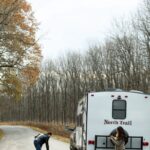
We’ve seen an easy-looking campsite approach turn into a rutted track that called for walking ahead and checking clearance before every dip. That’s the catch: a trailer that handles graded gravel may struggle on rocky trails, no matter how tough its badge or how capable the tow vehicle seems.
Key Takeaways
- Judge the exact model, year, and condition—not just the brand name. Off-road suitability varies across floor plans and individual trailers.
- Check the real weak points: loaded ground clearance, suspension, tires, frame, ramp door, tanks, and exposed plumbing.
- Verify weight ratings with your actual toys and travel gear. Brochure dry weight won’t tell you how your loaded setup performs.
- Treat online brand rankings as leads, not proof. Confirm concerns through documentation, inspections, and model-specific owner reports.
- Match the trailer to the route. Maintained gravel roads are a very different challenge from deep ruts, steep grades, or rocky trails.
Table of Contents
- ⚡️ Quick Tips and Facts: Choosing an Off-Road Toy Hauler
- 🧭 Background: Toy Haulers, Off-Road Claims, and Real-World Limits
- 🔎 What “Off-Road Ready” Really Means for a Toy Hauler
- Ground clearance, suspension, tires, and frame strength
- Cargo carrying capacity, tongue weight, and loaded weight
- Why a four-wheel-drive truck doesn’t make a trailer off-road capable
- 🚩 Toy Hauler Brands and Models to Scrutinize for Off-Road Use
- 1. Mainstream travel-trailer toy haulers with low clearance
- 2. Fifth-wheel toy haulers built for pavement and campgrounds
- 3. Lightweight toy haulers with limited payload
- 4. Models with exposed plumbing, steps, or low-hanging tanks
- 5. Used toy haulers with undocumented lifts or suspension changes
- ✅ Brands and Toy Hauler Lines to Consider for Rough-Road Travel
- Off-road-focused toy haulers and adventure trailers
- What to verify by model year and floor plan
- 🧰 How to Inspect a Toy Hauler Before Buying
- Questions to ask the dealer or manufacturer
- How to check the build sheet, ratings, and component specs
- A practical pre-purchase inspection checklist
- 🚙 Matching Your Tow Vehicle to an Off-Road Toy Hauler
- Payload, towing capacity, hitch rating, and pin weight
- Tire choice, brake controller, and drivetrain considerations
- 🛠️ Can You Upgrade a Standard Toy Hauler for Rough Roads?
- Suspension, tires, and lift kits: benefits and trade-offs
- Protecting tanks, wiring, plumbing, and the underbody
- Why upgrades can affect warranty, handling, and safety
- 🌲 Choosing the Right Toy Hauler for Your Kind of Off-Road Trip
- Gravel roads, forest roads, and remote campsites
- Sand, mud, steep grades, and rocky trails
- Toy haulers for ATVs, motorcycles, and side-by-sides
- 💡 Common Buying Mistakes and Red Flags
- Conclusion
- 🔗 Recommended Links
- ❓ FAQ
- Are any toy hauler brands universally bad for off-road use?
- Can a toy hauler go on forest service roads?
- Are fifth-wheel toy haulers better off-road than travel trailers?
- Does a lift kit make a toy hauler off-road capable?
- What should I check first when buying a used off-road toy hauler?
- 📚 Reference Links
⚡️ Quick Tips and Facts: Choosing an Off-Road Toy Hauler
Short version: There isn’t a reliable, universal blacklist of toy hauler brands to avoid. Off-road suitability depends on the specific model, floor plan, year, condition, load, and route—and “off-road package” can mean anything from useful underbody protection to little more than a tougher-looking decal. If you’re also comparing overall reliability reputations, see our guide to worst RV brands, but don’t treat brand-wide rankings as a substitute for inspecting the trailer in front of you.
| Quick check | What to look for | Why it matters |
|---|---|---|
| Intended route | Maintained gravel or forest road versus rocky, rutted trail | A trailer that tolerates a campground access road may not survive technical terrain |
| Clearance | Measure the lowest vulnerable point, not just the frame | Steps, tanks, plumbing, and stabilizers can hit first |
| Ratings | Verify GVWR, cargo carrying capacity, axle and tire ratings, and hitch or pin weight | Gear, fuel, water, and toys all consume capacity |
| Construction | Inspect frame, suspension, welds, ramp door, and underbody | Repeated impacts and flex expose weak points |
| Condition | Check for cracks, bent components, water intrusion, and repair history | Prior damage can matter more than the name on the side |
| Claims | Confirm features on the exact model-year build sheet | A brand’s marketing language may not describe every floor plan |
- ✅ Usually reasonable: Slow travel on maintained gravel or graded access roads, after checking clearances and loading.
- ⚠️ Needs careful veting: Long washboard roads, uneven two-track, steep approaches, and remote routes where repairs are difficult.
- ❌ Usually a poor match: Technical rock trails, deep ruts, tight switchbacks, or routes likely to drag a long, heavy trailer over obstacles.
- Don’t buy by badge alone. A well-maintained mainstream toy hauler may suit mild dirt roads better than a neglected “off-road” model.
- Don’t trust a lift as proof of capability. More height can change step access, handling, geometry, and component loads.
Our RV Brands™ team treats “off-road” as a spectrum, not a magic switch. One memorable campsite approach looked harmless on a map, then turned into a lumpy, narrow track with a drainage dip that had us walking ahead to check the trailer’s underbody. The lesson? The road’s roughest obstacle—not the brochure—sets the real limit.
🧭 Background: Toy Haulers, Off-Road Claims, and Real-World Limits

A toy hauler is designed to carry recreational equipment—often motorcycles, ATVs, or a side-by-side—in a garage area that commonly doubles as living space. That combination brings extra demands: concentrated cargo loads, a ramp door that must handle repeated loading, and a trailer that can be heavy even before you add toys and camping gear.
The phrase “off-road toy hauler” is used loosely. Some trailers are intended for rougher access roads; others are conventional RVs with styling or selected components that suggest adventure. Neither appearance nor a manufacturer’s general reputation tells you what a particular trailer can safely handle.
Why “brands to avoid” is the wrong question on its own
A brand can make multiple product lines, construction generations, and floor plans. A model might change substantially between years, and condition varies from one used unit to another. So, instead of declaring an entire manufacturer unsuitable, we recommend asking:
- What route will I actually drive?
- What is the trailer’s lowest clearance point?
- Can it carry my toys and gear within its ratings?
- How are the frame, suspension, tires, and ramp door configured?
- What does an independent inspection reveal?
That approach is less dramatic than a “never buy this brand” list, but it’s far more useful when you’re spending real money and heading far from a repair shop.
Industry commentary is a lead, not a verdict
The first YouTube video takes a sharply critical view of several toy hauler makers, including Coachmen Catalina, Grand Design Momentum, KZ RV, Winebago, and Eclipse Attitude. The speaker describes the ranking as “fluid” and makes serious claims about cargo capability, frame flex, or frame failures. Those are the speaker’s opinions and reported experiences, not a verified failure-rate study.
We can’t independently validate those specific allegations from the video summary alone, and they shouldn’t be presented as settled facts. A competing Facebook post about toy haulers is also inaccessible without a login, while the supplied Patriot Campers article provides no verifiable details in the available text. That means we won’t invent quotes or pretend those sources establish which brands are “the worst.”
What should you trust more? The exact trailer’s ratings, build sheet, inspection results, repair records, and evidence from owners of the same model year and floor plan. Owner discussions can reveal recurring concerns, but an individual story—good or bad—isn’t a controlled comparison.
🔎 What “Off-Road Ready” Really Means for a Toy Hauler
There is no single feature that turns a conventional toy hauler into a trail-ready rig. Capability comes from a system: clearance, suspension, tires, frame, braking, load distribution, and the driver’s route choices.
Ground clearance, suspension, tires, and frame strength
Start by looking underneath. The relevant measurement is not an attractive advertised clearance figure; it’s the clearance at the most vulnerable component with the trailer loaded as you’ll travel.
Check for:
- Low points: Waste tanks, plumbing, wiring, steps, stabilizers, spare tires, and suspension hardware.
- Suspension: Axle arrangement, spring condition, shock absorbers if fitted, equalizers, bushings, hangers, and signs of impact.
- Tires and wheels: Load rating, speed rating, age, condition, and whether the tires match the trailer’s requirements.
- Frame and welds: Cracks, fresh paint over suspicious repairs, bent sections, and damaged crossmembers.
- Ramp door: Saging, binding, damaged hinges, loose cables, and signs that loading has overstressed the structure.
A tougher tire sidewall or upgraded suspension component can help with appropriate use, but no single component compensates for an overloaded trailer or unsuitable frame design. Ask the manufacturer or a qualified RV technician to verify compatibility before changing suspension, wheels, or tires.
Cargo carrying capacity, tongue weight, and loaded weight
A toy hauler’s garage can make capacity calculations feel like a game of RV Tetris. The toy fits, the gear fits, and then the fresh-water tank, batteries, tools, food, fuel, and passengers’ belongings start quietly eating into the available margin.
Use the trailer’s certification label and documentation to verify its ratings. The National Highway Traffic Safety Administration provides tire-safety guidance; for towing questions, follow the trailer and tow-vehicle manufacturers’ limits rather than relying on an internet rule of thumb.
| Load item | What to verify | Common mistake |
|---|---|---|
| Toy or toys | Actual ready-to-ride weight, including accessories and fuel | Using a catalog dry weight |
| Water | Tank capacity and water weight | Forgeting that a full tank can substantially change total load |
| Batteries and add-ons | Installed weight and mounting location | Treating upgrades as weight-free |
| Garage cargo | Tie-down ratings and weight distribution | Concentrating heavy gear at the rear without checking loading guidance |
| Tow vehicle | Payload, axle ratings, and hitch or pin load | Looking at maximum tow rating alone |
| Trailer | GVWR, axle ratings, tire ratings, and cargo capacity | Assuming the cargo area’s size equals its carrying capacity |
Weigh the loaded combination. A public scale can help you compare actual axle weights with the applicable ratings. If you’re unsure how to interpret the numbers, ask a qualified scale operator, RV technician, or towing specialist. The RV Safety & Education Foundation also offers RV weighing and safety resources.
Why a four-wheel-drive truck doesn’t make a trailer off-road capable
Four-wheel drive can help the tow vehicle maintain traction. It cannot lift a low-hanging trailer tank over a rock, stop a long trailer from dragging across a breakover, or prevent damage from a poorly chosen line.
A trailer follows a different path than the truck. Its wheels cut corners differently, its rear overhang can swing wide, and its long body may meet a crest or dip at an awkward angle. On narrow roads, that geometry can turn an apparently easy obstacle into a scrape.
Practical rule: Walk unfamiliar sections when safe, check departure and approach angles, and turn around before the route becomes a rescue story.
🚩 Toy Hauler Brands and Models to Scrutinize for Off-Road Use
This is a screening list, not a claim that any brand is universally bad. The following categories deserve extra scrutiny because their designs or condition may not match rough-road use. Confirm every concern against the exact model and year.
1. Mainstream travel-trailer toy haulers with low clearance
A travel trailer built mainly for paved roads and established campgrounds may have a low step, exposed plumbing, or limited underbody protection. That doesn’t automatically make it a poor RV; it may be perfectly suitable for ordinary towing and mild access roads.
For any model, including products from Coachmen, inspect the actual unit rather than assuming the whole brand shares one design. The video speaker criticizes the Coachmen Catalina line’s toy-carrying dimensions and capacity, but that view should be checked against the specific Catalina model’s documentation and your toy’s real dimensions.
Scrutinize it if:
- The loaded trailer’s lowest components are close to the ground.
- Your toy is near the garage’s weight or dimensional limits.
- The route includes ruts, washouts, or steep transitions.
- The manufacturer does not provide clear information for the specific floor plan.
2. Fifth-wheel toy haulers built for pavement and campgrounds
Fifth wheels can offer a large garage and substantial storage, but a large body and high loaded weight can complicate travel on narrow, uneven roads. Greater interior space does not automatically mean greater trail capability.
When comparing Fifth Wheel RVs or Fifth Wheel RV Manufacturers, check loaded pin weight, overall length, turning clearance, and the underside. A long fifth wheel may be a good fit for a remote campground on a graded road but a poor fit for tight switchbacks or rough two-track.
The video also criticizes Grand Design Momentum, including claims about frame flex or failures. We can’t substantiate a brand-wide failure pattern here. If a Momentum—or any fifth wheel—is on your shortlist, inspect the frame and pin box carefully, examine service records, and seek a qualified inspection, especially on a used unit.
3. Lightweight toy haulers with limited payload
“Lightweight” can be helpful for towing, but it can also mean there is less cargo capacity than the roomy garage suggests. Compare the toy’s ready-to-ride weight with the trailer’s available capacity, then allow room for the rest of your load.
The video criticizes KZ RV products for allegedly struggling with heavy toys. Treat that as one reviewer’s perspective, not a verified finding about every KZ model. Confirm the specific trailer’s ratings and weigh it loaded.
Red flags include:
- A toy that nearly consumes the entire cargo allowance.
- A garage layout that leaves little room for secure, balanced loading.
- Axles or tires with little remaining rating margin.
- Seller claims based on an unloaded brochure weight rather than a loaded scale ticket.
4. Models with exposed plumbing, steps, or low-hanging tanks
A long step or exposed tank can become the first point of contact on a dip or crest. Look for actual vulnerability, not just “off-road” branding.
We also wouldn’t rule out a trailer solely because a competitor or online commenter calls its manufacturer poor. The video speaker criticizes Winebago toy haulers and Eclipse Attitude products, citing alleged frame and ramp-door issues. Those are serious claims, but they need model-specific evidence: inspection findings, repair documentation, applicable recalls or service information, and corroborating reports.
5. Used toy haulers with undocumented lifts or suspension changes
A used trailer with a lift, replacement axle, or modified suspension isn’t automatically a bad buy. It does call for extra homework. Poorly matched modifications can affect ride height, alignment, brake performance, tire clearance, and loading.
Ask for:
- Receipts and installer information.
- Part numbers and documentation showing the components are rated for the trailer.
- Records of alignment, bearing, brake, and tire work.
- Evidence that the changes comply with manufacturer guidance and applicable requirements.
- An independent inspection of the frame, suspension mounts, and underbody.
If the seller says, “It’s lifted, so it’s ready for anything,” that’s not proof. It’s a cue to ask more questions.
✅ Brands and Toy Hauler Lines to Consider for Rough-Road Travel
Rather than labeling a brand “good” or “bad,” begin with manufacturers and product lines that publish enough information to evaluate the actual build. Then verify the exact model’s construction, ratings, warranty terms, and intended use.
Some buyers investigate the Forest River XLR, Grand Design Momentum, KZ RV, Coachmen, Winebago, and Eclipse Attitude product families. These links are starting points—not endorsements of every floor plan or model year. No brand name alone proves that a trailer can handle your route.
For genuinely rougher travel, compare purpose-built adventure trailers and off-road-oriented designs as well as traditional toy haulers. Australian maker Patriot Campers is one example of a company associated with off-road camping products, but its offerings and terminology may not be directly comparable to a North American garage-style toy hauler. Check dimensions, carrying capacity, service access, and compatibility with your vehicle before comparing categories.
Off-road-focused toy haulers and adventure trailers
A smaller, purpose-built trailer can be easier to maneuver and less likely to drag than a large fifth wheel, but it may offer less living space, less garage capacity, and fewer repair or service options in your region.
| Option | Potential advantage | Trade-off to check |
|---|---|---|
| Conventional travel-trailer toy hauler | Larger selection and more living space | Many models prioritize campground use over rough-road clearance |
| Fifth-wheel toy hauler | Large garage and living area | Size, loaded weight, pin weight, and turning demands |
| Compact off-road-oriented trailer | Smaller footprint and purpose-focused hardware | Limited toy dimensions, storage, and service availability |
| Custom or modified build | Can be tailored to a particular vehicle and route | Higher need for engineering documentation and component verification |
What to verify by model year and floor plan
Before choosing a model, collect the exact model-year brochure, certification label details, owner’s manual, build sheet, and warranty information. Compare them with the actual trailer—not a similar unit with a different axle package or floor plan.
Verify these points:
- Gross vehicle weight rating (GVWR) and cargo carrying capacity.
- Axle, wheel, and tire ratings.
- Loaded hitch or pin weight requirements.
- Garage dimensions, ramp rating, and tie-down capacity.
- Lowest underbody clearance points.
- Suspension and frame specifications, where available.
- Warranty exclusions or requirements involving unpaved roads and modifications.
- Dealer service access near the areas where you travel.
For buyers comparing motorhome alternatives for the tow vehicle or travel style, browse our Class C motorhome and Class A motorhome categories. They won’t replace a tow-vehicle weight check, but they may help you decide whether a trailer is the right format.
🧰 How to Inspect a Toy Hauler Before Buying
Take your time. A shiny exterior can hide a bent hanger; a tidy garage can conceal a poorly repaired ramp. Ideally, inspect the trailer cold, unhooked, and with enough time to look underneath. If you’re not comfortable checking structure or suspension, hire an independent RV inspector.
Questions to ask the dealer or manufacturer
Ask direct questions, then request written or documented answers where possible:
- What is the exact model year and floor plan?
- What are the ratings for the trailer, axles, tires, ramp, and garage tie-downs?
- What is the manufacturer’s guidance for unpaved-road use?
- Are there limitations involving washboard roads, rough access, or modifications?
- Has the trailer had frame, suspension, ramp, or water-intrusion repairs?
- Can the seller provide service records and prior inspection reports?
- Which components are original, and which have been replaced or modified?
- Is the claimed “off-road package” factory-installed on this exact unit?
A confident seller should be able to point you toward documentation. If they respond with only “It’s built tough,” ask for the specifications that support the claim.
How to check the build sheet, ratings, and component specs
Use this sequence:
- Match the paperwork to the trailer. Confirm the VIN, model year, and floor plan.
- Read the certification label. Record the trailer’s weight ratings and tire information.
- Compare the build sheet. Check the axle, suspension, tire, wheel, and option details.
- Inspect the actual load area. Measure toy length, height, width, and tie-down positions.
- Check tow-vehicle limits. Include payload, axle ratings, hitch capacity, and passengers.
- Verify on a scale. Weigh the loaded setup before a demanding trip.
- Confirm route suitability. Ask the manufacturer or a qualified technician about intended use and limitations.
The NHTSA VIN lookup can help check for applicable recalls. Also consult manufacturer service information and the trailer’s own documentation; recall checks do not replace a mechanical inspection.
A practical pre-purchase inspection checklist
Exterior and structure
- Inspect frame rails, crossmembers, welds, and suspension mounts for cracks, bends, rust, or suspicious repairs.
- Open and close the ramp several times; check alignment, hinges, latches, cables, and seals.
- Look for uneven gaps, soft spots, water stains, and fresh sealant that may warrant closer inspection.
Underbody and running gear
- Identify the lowest components and note their clearance.
- Look for scraped tanks, hanging wires, damaged plumbing, and bent stabilizers.
- Check tires for correct specifications, uneven wear, cracks, and age.
- Examine brakes, bearings, hubs, springs, shackles, and equalizers.
Garage and load system
- Confirm tie-down points are secure and suitable for your equipment.
- Measure the door opening and interior—not just the brochure’s garage length.
- Check the ramp’s published capacity and whether the toy can be loaded safely.
- Look for floor flex, cracked flooring, loose trim, or evidence of impact.
Living systems
- Test water, propane, electrical, HVAC, appliances, and waste systems.
- Inspect for leaks beneath sinks and around tanks, bathrooms, and exterior penetrations.
- Check that fixtures and doors latch securely for travel.
Documents and history
- Review service records, prior damage disclosures, warranty status, and modification invoices.
- Match the VIN on the documents and trailer.
- Arrange an independent inspection when the trailer is used, heavily modified, or intended for demanding roads.
🚙 Matching Your Tow Vehicle to an Off-Road Toy Hauler
The tow rating is only one part of the picture. A truck can have enough advertised tow capacity yet run out of payload once passengers, tools, a hitch, and the trailer’s tongue or pin load are added.
Payload, towing capacity, hitch rating, and pin weight
Check the tow vehicle’s door-jamb payload label and owner’s manual. Then compare all relevant limits:
| Rating or measurement | Why to check it |
|---|---|
| Tow vehicle payload | Includes occupants, cargo, accessories, and hitch load |
| Gross vehicle weight rating | Limits the loaded tow vehicle’s total weight |
| Front and rear axle ratings | A heavy hitch or pin load may overload an axle |
| Hitch or fifth-wheel rating | Must support the trailer’s actual loaded hitch or pin load |
| Trailer GVWR and axle ratings | Limit the trailer’s loaded weight and axle loads |
| Combined rating | Limits the loaded truck-and-trailer combination |
Do not estimate pin or tongue load from a forum post and assume it applies to your rig. Use actual loaded weights and the vehicle and trailer manufacturers’ instructions. If you’re choosing a fifth-wheel tow vehicle, our fifth-wheel RV resources and manufacturer directory can help with research, but the ratings still decide compatibility.
Tire choice, brake controller, and drivetrain considerations
- Tires: Use tires that meet the required load and speed specifications. Keep them properly maintained and inspect them before rough-road travel.
- Brakes: Confirm the trailer brakes work correctly and that the brake controller is properly set up.
- Drivetrain: Four-wheel drive can support traction on suitable roads, but it cannot eliminate trailer clearance or stability limits.
- Cooling and service: Review the tow vehicle’s towing guidance and maintenance schedule, especially for hot, steep, or remote trips.
- Recovery: Carry only recovery equipment you know how to use. A recovery point suitable for a vehicle isn’t automatically suitable for a trailer.
🛠️ Can You Upgrade a Standard Toy Hauler for Rough Roads?
Sometimes, but upgrades have limits. Improving one component may move stress elsewhere, and a modification that raises the trailer can affect handling or the loads on suspension and frame components.
Suspension, tires, and lift kits: benefits and trade-offs
Potential benefits of a properly engineered upgrade may include more clearance or components better suited to the intended load. Trade-offs can include altered geometry, reduced stability, changes in step height, tire interference, and extra stress on mounts.
Before modifying:
- Identify the trailer’s exact axle and suspension configuration.
- Ask the manufacturer or a qualified trailer technician what is approved.
- Confirm the proposed parts are rated for the loaded trailer.
- Check brake, wheel, tire, and clearance compatibility.
- Have the finished work inspected and documented.
- Reweigh and recheck alignment and tire clearance.
Avoid improvised lift kits, oversized tires, or spring swaps based only on a video or a friend’s setup. Similar-looking trailers can have different frame and axle specifications.
Protecting tanks, wiring, plumbing, and the underbody
Underbody protection can reduce damage risk, but it won’t make an unsuitable trailer suitable for technical trails. Protect only components that can be shielded without blocking required access, ventilation, drainage, or inspection.
Ask a qualified technician before adding plates or guards near:
- Waste and fresh-water tanks.
- Brake wiring and electrical connections.
- Propane lines and other service components.
- Suspension travel and moving parts.
- Drain outlets and access panels.
After rough-road travel, inspect the underside for fresh scrapes, loose fasteners, fluid leaks, damaged wiring, and shifted components. Catching a small problem at camp beats discovering it at the next mountain pass.
Why upgrades can affect warranty, handling, and safety
A modification may change warranty coverage for affected components, and a poorly planned change can compromise safe operation. Read the manufacturer’s warranty and consult the manufacturer before altering the frame, suspension, brakes, or running gear. For consumer guidance on warranties, the Federal Trade Commission’s warranty information explains general warranty principles; your specific written warranty governs the RV.
🌲 Choosing the Right Toy Hauler for Your Kind of Off-Road Trip
Before shopping, describe your route in plain language. “We camp off-grid” can mean a smooth gravel road with a spacious turnaround—or a rutted track where a long trailer becomes an expensive chisel.
Gravel roads, forest roads, and remote campsites
For maintained gravel and graded access roads, many conventional toy haulers may work if they are properly loaded, in good condition, and driven slowly. Scout the route, check seasonal conditions, and make sure there is room to turn around.
The USDA Forest Service provides information about national forests and public-land recreation. Always check local road conditions, vehicle restrictions, closures, and permit requirements; access rules vary by location.
Sand, mud, steep grades, and rocky trails
These conditions raise the stakes:
- Sand: Heavy trailers can be difficult to recover once boged down.
- Mud: Traction and braking may deteriorate, and mud can hide ruts.
- Step grades: Check tow-vehicle capability, braking, turning space, and ground clearance.
- Rocky sections: Low tanks, steps, and long overhangs are vulnerable to impacts.
- Washboard: Repeated vibration can loosen hardware and stress components.
If a route looks questionable, stop before committing. A turnaround may be inconvenient; a damaged frame in a remote area is much worse.
Toy haulers for ATVs, motorcycles, and side-by-sides
Measure your equipment with accessories installed, and check weight with fuel and gear. Verify the ramp opening, garage length, tie-down ratings, loading angle, and remaining cargo capacity.
The Recreational Off-Highway Vehicle Association offers safety information for recreational off-highway vehicles. Follow your vehicle maker’s transport and tie-down instructions, and secure every item for travel—not just the largest one.
Don’t forget the garage’s other job: If the space becomes a sleeping area, workshop, or living room, confirm that your intended setup does not conflict with safe ventilation, appliance use, or manufacturer guidance.
💡 Common Buying Mistakes and Red Flags
- ❌ Buying by brand ranking alone. A viral list is a starting point for questions, not a substitute for inspection.
- ❌ Confusing a high tow rating with adequate payload. The hitch load still counts.
- ❌ Using brochure dry weight as the loaded weight. Real trips add toys, water, batteries, and gear.
- ❌ Assuming a lift means off-road capability. Suspension changes require proper engineering and verification.
- ❌ Ignoring the trailer’s lowest point. The frame may clear while a tank or step does not.
- ❌ Skipping an independent inspection. Especially risky for used, modified, or previously damaged trailers.
- ❌ Taking inaccessible social posts as proof. If a post can’t be verified, don’t quote it as evidence.
- ✅ Matching the trailer to your actual route. Mild gravel roads and technical trails are different jobs.
- ✅ Keeping a weight margin. Leave room for realistic travel loads and verify with scale measurements.
- ✅ Checking owner reports carefully. Look for repeated, model-specific patterns and documented repairs, not isolated anecdotes.
- ✅ Walking unfamiliar obstacles when safe. The time spent scouting is cheaper than underbody repair.