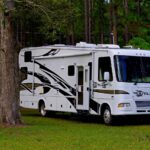


Small space living in an RV works best when you choose a layout for your real daily routine, then give every item a job and a home. The right compact rig can feel comfortable and freeing; the wrong one can turn cooking dinner into a furniture-moving competition.
We’ve seen people fall for a beautiful floor plan, then discover the bed blocks the bathroom or there’s nowhere to stash muddy shoes. Even full-time RVers Kathleen and Greg, who made a 1969 Terry camper their home, described a bumpy adjustment before their new routines began to feel natural.
The trick isn’t squeezing more stuff into fewer cabinets. It’s choosing what earns its space, testing how you’ll actually sleep, cook, work, and clean, and leaving room for the occasional rainy day when the outdoors stops being your living room.
Key Takeaways
- Choose the smallest RV that comfortably supports your everyday life, not just weekend adventures or occasional guests.
- Test the floor plan in real-life mode: make the bed, use the bathroom, cook, work, and check access with slides retracted.
- Make each item earn its space with multipurpose furniture, smart vertical storage, and regular decluttering.
- Plan around trade-offs: compact RVs can be easier to maneuver, but often have less privacy, storage, and tank capacity.
- Rent a similar RV before buying to discover whether its layout and daily routines suit you.
Table of Contents
- ⚡ Quick Tips and Facts
- 🏕️ Background: What Small-Space RV Living Really Means
- Small RVs, camper vans, and compact travel trailers: what counts?
- Who thrives in a compact RV—and who may want more room
- 📏 Choosing the Right Small RV Layout
- Class B camper vans
- Small Class C motorhomes
- Compact travel trailers and teardrop campers
- Pop-up campers and truck campers
- Floor plans, sleeping capacity, and usable space
- 🛠️ 20 Smart Ways to Make a Small RV Feel Bigger
- 1. Choose furniture that does double duty
- 2. Use vertical storage from floor to ceiling
- 3. Claim overlooked corners and awkward gaps
- 4. Organize cabinets with bins and dividers
- 5. Make the bed work harder
- 6. Store lightweight items overhead
- 7. Keep entryway clutter under control
- 8. Use collapsible kitchen gear
- 9. Hang frequently used tools
- 10. Create a tidy charging station
- 11. Make the bathroom storage-friendly
- 12. Choose compact, multipurpose appliances
- 13. Use clear containers for pantry staples
- 14. Rotate seasonal clothing and gear
- 15. Add hooks without blocking walkways
- 16. Keep outdoor gear outside when practical
- 17. Use mirrors and light colors thoughtfully
- 18. Make windows work for ventilation and light
- 19. Give every item a home
- 20. Declutter before you buy another organizer
- 🍳 Small RV Kitchen Organization and Cooking
- Stocking a compact RV pantry
- Meal planning with limited refrigerator space
- Cooking smells, ventilation, and fire safety
- 🚿 Small RV Bathroom, Laundry, and Water Use
- Wet baths versus dry baths
- Shower routines and gray-water conservation
- Laundry solutions for life on the road
- 🛏️ Sleeping, Privacy, and Everyday Comfort
- Making convertible beds comfortable
- Privacy for couples, families, and guests
- Managing temperature, light, and noise
- 💻 Working, Studying, and Staying Connected in a Small RV
- Creating a compact workstation
- Internet, power, and device storage
- Sharing space during work and downtime
- 🧹 Cleaning, Maintenance, and Managing Daily Clutter
- Quick daily reset routines
- Cleaning supplies that earn their storage space
- Preventing moisture, mold, and odors
- 🐕 Living Small with Kids, Pets, and Hobbies
- Family-friendly storage and routines
- Pet gear, feeding stations, and safe travel
- Making room for hobbies and outdoor equipment
- ✅ The Upsides and ❌ Downsides of Small-Space RV Living
- Benefits: simpler routines, easier travel, and less clutter
- Challenges: privacy, storage limits, and close quarters
- How to tell if compact RV living suits your lifestyle
- 💰 Budgeting, Buying, and Inspecting a Small RV
- New versus used small RVs
- Questions to ask before choosing a floor plan
- Storage, payload, towing, and weight ratings
- A practical pre-purchase inspection checklist
- Renting a compact RV before buying
- 🚐 Small RV Travel, Campsites, and Off-Grid Living
- Driving, parking, and campground access
- Water, electrical, and dump-station basics
- Bondocking in a small RV
- Packing for changing weather and trip length
- ⚠️ Safety and Practical Considerations for Compact RVs
- Secure belongings before driving
- Ventilation, carbon monoxide, and fire prevention
- Safe storage of tools, batteries, and chemicals
- 💡 Common Small-Space RV Living Mistakes
- Conclusion
- 🔗 Recommended Links
- ❓ FAQ
- How do you maximize storage in a small RV?
- Can two people live comfortably in a small RV?
- What should you not bring when living in an RV?
- How do you keep a small RV organized?
- Is small-RV living cheaper than living in a house?
- What is the best small RV for full-time living?
- 📚 Reference Links
Quick Tips and Facts
Small-space RV living can feel wonderfully freeing—or like sharing a closet with a rolling kitchen. Usually the difference comes down to layout, habits, and how honestly you test-drive your everyday routine.
If you’re exploring RV lifestyle ideas, start with what you do on an ordinary Tuesday, not with the dreamy weekend version of yourself who supposedly never needs a second pair of shoes. We’ve seen shoppers fall for gorgeous cabinetry, then realize they have nowhere to work, shower, or store the dog food. Pretty matters; daily function matters more.
| Quick fact | What it means for you |
|---|---|
| Small RVs trade room for maneuverability | A compact rig may be easier to park and take on narrow roads, but storage, tanks, and living space are usually more limited. |
| The best floor plan depends on your routine | A fixed bed saves setup time; a convertible dinette can free floor area, but has to be remade regularly. |
| “Sleeps four” doesn’t mean “comfortably lives four” | Sleeping capacity is not the same as usable daytime space, privacy, or storage. |
| Slideouts add space only when parked | Check whether the slide can extend at your intended campsites and whether the RV remains usable with it retracted. |
| Your loaded weight matters | Passengers, water, food, batteries, and gear all count toward vehicle or trailer limits. Verify ratings using the NHTSA RV safety guidance. |
| Compact living is a habit, not a magic cabinet | Set a limit for clothing, kitchen gear, and hobby equipment before the storage problem gets out of hand. |
| A trial stay can reveal deal-breakers | Rent a similar layout and test cooking, sleeping, work, and bathroom routines before committing. |
Our quick recommendation: Choose the smallest RV that comfortably handles your normal week, not the smallest one you can technically endure. If you want a nimble road-trip base, a Class B or compact trailer may fit. If you’ll work inside, travel with kids, or live aboard full time, the extra space of a small Class C may be worth the added size. Browse our Class C motorhome guides if you’re weighing that trade-off.
Background: What Small-Space RV Living Really Means

Small-space RV living is less about square footage than how many jobs each square foot performs. A dinette might be a dining table, laptop desk, craft bench, and guest bed. The catch? Someone has to convert it, and the pillows need somewhere to go.
The scale varies widely. A camper van may be under 20 feet long; a compact motorhome or travel trailer can be larger while still feeling small compared with a conventional home. For perspective, the U.S. Census Bureau tracks home size and housing data, but there’s no single official definition of a “small RV.” In practice, RV owners use the term for rigs where everyday storage and shared floor space need active management.
Small RVs, camper vans, and compact travel trailers: what counts?
| RV type | Typical small-space advantage | Common compromise |
|---|---|---|
| Class B camper van | Drives more like a large van; often easy to park and take on day trips | Tight bathroom, compact kitchen, limited storage |
| Compact Class C | More separation between living and sleeping areas; often more tanks and cabinets than a van | Taller and wider, with a larger driving footprint |
| Small travel trailer | Tow vehicle can be unhitched at camp; floor plans vary widely | Requires towing confidence and a suitable vehicle |
| Teardrop trailer | Simple, lightweight camping setup | Often no indoor bathroom and limited standing room |
| Truck camper | Compact footprint and access to many campsites | Small interior and payload-sensitive truck setup |
| Pop-up camper | Folds down for towing and storage | Fabric-sided models offer less insulation and security than hard-sided RVs |
“Small” doesn’t automatically mean inexpensive, low-maintenance, or off-grid ready. A compact RV may have sophisticated systems packed into a tight service area. Check the specific model’s owner’s manual and specifications rather than assuming two rigs of similar length have similar capabilities.
Who thrives in a compact RV—and who may want more room
Small-space RV life tends to suit people who enjoy being outdoors, can keep possessions in check, and don’t mind routines that involve resetting a room. It may be harder if you need separate workspaces, frequent indoor entertaining, lots of equipment, or personal space when everyone is tired.
Families can make it work, too, but the routines matter. In a story about a California family living in a roughly 180-square-foot RV, Ashley of Arows and Bows described giving each child a clothing bin and using a “one in, one out” approach. The family pared toys down to books, a stuffed animal per child, and a few creative-play bins. That’s not a universal blueprint; it’s a useful reminder that limits work best when everyone understands them.
We also love the perspective of Kathleen and Greg in a 1969 Terry camper: the couple adapted a three-season trailer for full-time living, used a gym for showers, and described the first months as rough before the rhythm began to feel like home. Their experience highlights an important truth: a clever setup helps, but adjustment takes time.
Choosing the Right Small RV Layout
The right layout is the one you can use without turning every meal, bedtime, or work call into furniture Tetris. During a showroom visit, imagine your full routine—not only the polished campsite version. Open the fridge. Sit at the desk. Stand in the shower. Try getting into bed while the other person is still awake.
| Layout feature | Helpful when… | Think twice if… |
|---|---|---|
| Fixed bed | You want an always-ready sleeping area | It consumes space you need for daytime living |
| Convertible dinette | You want flexible seating and occasional guest space | You dislike daily setup and bedding storage |
| Murphy bed | You want more daytime floor area | You need a permanently accessible bed or a second sleeping surface |
| Slideout | You want more parked living room | You often camp where slide clearance is tight or want full access while traveling |
| Wet bath | You want an indoor bathroom in a compact footprint | You dislike drying the shower area after each use |
| Rear garage or cargo bay | You carry bulky sports or work gear | You’d rather have that space devoted to living or storage |
Class B camper vans
Class B motorhomes are built on van platforms, commonly based on chassis from brands such as Mercedes-Benz, Ford, or Ram. Their biggest selling point is agility: driving and parking can feel less intimidating than piloting a taller coach. That doesn’t mean every Class B fits in every parking garage, so always verify the height and posted clearance.
The trade-off is compact living. A wet bath, small galey, and limited wardrobes are common. A fixed twin-bed arrangement—like some Airstream Interstate models—can make sleeping easier for couples who prefer separate beds. Before choosing one, check whether the daytime seating suits you and where bulky items like chairs, coats, and food will go.
Best fit: solo travelers, couples who spend much of the day outdoors, and drivers who value maneuverability.
Potential mismatch: families needing privacy, people carrying bulky equipment, and full-timers who want a roomy indoor work area.
Small Class C motorhomes
A compact Class C motorhome generally offers a cab-over sleeping area and more interior volume than a camper van. Depending on the model, that can mean a larger fridge, more tank capacity, a bigger bathroom, and greater separation between sleeping and living spaces.
Models such as the Winebago View show how a compact coach can add a slideout and expanded lounge space. That extra room is useful at camp, but remember: a slideout needs clearance, and some floor plans become awkward when it’s retracted. If you’re looking at larger motorhome styles, compare with our Class A motorhome guides to see how size changes comfort, driving, and campsite options.
Best fit: couples wanting a larger bathroom, families who need additional sleeping space, or full-timers who spend more time indoors.
Potential mismatch: travelers prioritizing van-like parking, low height, or the simplest possible footprint.
Compact travel trailers and teardrop campers
A travel trailer lets you leave the trailer at camp and use the tow vehicle for errands. Compact models can be a practical middle ground: more floor-plan flexibility than many vans, without a motorhome’s combined living and driving setup. Check that your vehicle’s tow rating, payload, hitch rating, and braking setup match the trailer as loaded—not just its advertised dry weight.
Teardrops are especially compact, but often have limited indoor living space. Some place the galey outdoors, which is cheerful in good weather and considerably less enchanting in a cold rain. For trailer shoppers considering larger layouts, our fifth-wheel RV resources and fifth-wheel manufacturer directory cover roomier, though generally larger, options.
Best fit: campers who want to unhitch and explore locally, and travelers who don’t need a large indoor lounge.
Potential mismatch: people wanting an all-weather kitchen, a generous bathroom, or a one-vehicle setup.
Pop-up campers and truck campers
Pop-up campers can tow compactly and open into a surprisingly livable space at camp. Soft-sided sections may need extra care in cold, wet, or windy conditions; confirm the model’s insulation and weather limitations before planning a season-long trip.
Truck campers keep the living unit on the truck, which can be handy for certain travel styles, but the truck’s payload capacity is critical. Add the camper, passengers, fuel, accessories, water, and cargo when checking the truck’s weight ratings. The NHTSA vehicle weight-rating guide explains why the sticker on the vehicle matters more than optimistic estimates.
Best fit: travelers who value a compact campsite footprint and have a correctly matched truck.
Potential mismatch: anyone expecting large floor space, easy interior access for every passenger, or generous built-in storage.
Floor plans, sleeping capacity, and usable space
Treat “sleeps four” as a starting point, not a comfort guarantee. Ask how many beds are adult-sized, whether one person must climb over another, and what the sleeping area turns into during the day.
A useful showroom test:
- Set up every bed. Time the conversion and check where bedding goes.
- Use the kitchen while someone passes behind you. If the aisle turns into a traffic jam, daily meals may become a negotiation.
- Open doors and drawers at the same time. Check for collisions and blocked pathways.
- Test the bathroom with the door shut. Make sure you can sit, change, and store toiletries.
- Check the rig in travel mode. Can you reach the fridge, bathroom, and essentials with slides retracted?
- Picture a rainy day. Would everyone have a reasonable place to sit, work, read, or simply be alone?
The compact RV advice from Gone With the Wyns’ small-RV guide makes a strong point: don’t buy extra beds for occasional guests if doing so makes everyday life harder. Guests can sleep outdoors or visit at home; you live with the floor plan every day.
20 Smart Ways to Make a Small RV Feel Bigger
Before buying an organizer, take a breath and measure. A small space can become more usable through thoughtful storage, but too many bins can create a very organized pile of stuff.
1. Choose furniture that does double duty
Look for benches with storage, fold-down tables, or a dinette that converts to a bed only if you’ll actually use it. A storage ottoman can hold blankets while serving as a footrest, but make sure it stays secure during travel.
Tip: Test the furniture in both modes. If transforming it requires moving half the cabin, that “versatile” feature may become an everyday nuisance.
2. Use vertical storage from floor to ceiling
Take advantage of wall space with lightweight organizers, narrow shelves, and removable hooks. Keep heavier objects low and secured. For overhead cabinets, use latches or bins that won’t spill their contents when the RV hits a bump.
Tip: Leave access to vents, windows, emergency exits, and electrical panels. Storage should never make safety equipment hard to reach.
3. Claim overlooked corners and awkward gaps
Look for space beside the bed, beneath a bench, behind a door, or between a cabinet and wall. Slim bins can hold shoes, dog leashes, or cleaning cloths.
Tip: Measure the gap and check that the item cannot slide into a moving part or block a heater.
4. Organize cabinets with bins and dividers
Use bins to group snacks, toiletries, and small tools. A bin lets you pull out a whole category instead of excavating the cabinet like an archaeological site.
Tip: Choose bins that fit the cabinet opening and can be secured. Label them by use, not by an elaborate taxonomy only you understand.
5. Make the bed work harder
Use under-bed storage for items you don’t need every day, such as spare linens or seasonal clothing. If you have a Murphy bed, plan where pillows and bedding go before it folds away.
Tip: Don’t overpack under-bed compartments. Leave room for airflow where the manufacturer recommends it, and keep heavy items from shifting.
6. Store lightweight items overhead
Soft clothing, hats, and empty bags can work well in overhead storage. Heavier gear should generally live lower and be secured for travel.
Tip: Weight distribution affects handling. Follow the RV maker’s loading guidance and the vehicle’s ratings rather than filling every cabinet equally.
7. Keep entryway clutter under control
Set up a small “landing zone” for keys, shoes, jackets, and the dog’s leash. A washable mat catches dirt before it tours the whole coach.
Tip: Keep the entry clear enough to exit quickly, especially if it’s also an emergency exit.
8. Use collapsible kitchen gear
Collapsible bowls, strainers, and storage containers can save cabinet room. But don’t replace every sturdy item with a collapsible version: some are less stable for chopping, mixing, or hot food.
Tip: Start with the bulky pieces you use regularly. If it only saves space once a year, it may not deserve a spot.
9. Hang frequently used tools
A small rail or secure hooks can keep potholders, measuring spons, or a flashlight close at hand.
Tip: Test every hook while parked and while traveling. A loose utensil can become a noisy projectile, and adhesive hooks may not hold on all surfaces.
10. Create a tidy charging station
Keep charging cables and small electronics together in a designated basket or drawer. A single power strip or charging hub can reduce cable sprawl, provided it’s appropriate for your electrical setup.
Tip: Avoid overloading circuits. Follow the device and RV electrical-system instructions, and don’t bury warm chargers under bedding.
11. Make the bathroom storage-friendly
Use a small caddy for toiletries and removable hooks for towels. In a wet bath, store products in a waterproof container that can be moved out of the spray zone.
Tip: Dry surfaces after use and allow ventilation. Damp towels in a closed cabinet are a reliable way to invite odors and mildew.
12. Choose compact, multipurpose appliances
A kettle, toaster, air fryer, and slow cooker may all be useful—but together they can overwhelm both storage and available electrical capacity. Pick appliances based on your real meals and power source.
An Instant Pot can be versatile for some RV cooks, but consider its size, wattage, cooking style, and cleanup needs before claiming cabinet space.
13. Use clear containers for pantry staples
Transparent containers make it easier to spot what’s running low. Keep food sealed and store it securely so it doesn’t spill during travel.
Tip: Label contents and date opened. Avoid transferring foods into containers that are hard to clean or don’t seal well.
14. Rotate seasonal clothing and gear
Keep current-season essentials accessible and move off-season items into storage only if you can retrieve them when needed. For full-time travelers, a compact “capsule wardrobe” can simplify choices.
Tip: Don’t pack for every possible climate in the same cabinet. Plan laundry and restocking stops instead.
15. Add hooks without blocking walkways
Hooks can hold coats, hats, and towels, but an overstuffed row becomes a snag hazard.
Tip: Check clearance around doors, windows, and the path to the bed. Mount items securely and keep heavy objects low.
16. Keep outdoor gear outside when practical
Use a locked exterior compartment, bike rack, or purpose-built cargo system for bulky gear, following the RV and accessory manufacturer’s limits.
Tip: Protect equipment from weather and theft, and confirm that racks don’t block lights, license plates, doors, or required visibility.
17. Use mirrors and light colors thoughtfully
Light finishes and mirrors can help a room feel open, but they don’t add actual square footage. Choose durable, easy-to-clean surfaces that can handle travel vibration.
Tip: Avoid placing mirrors where they reflect bright exterior light into sleeping areas or create distracting glare.
18. Make windows work for ventilation and light
Daylight can make a compact interior feel less closed in. Open windows and roof vents as appropriate for weather and safety, while using shades for sleep and privacy.
Tip: A fan can help move air, but it isn’t a substitute for safe ventilation around fuel-burning appliances. Follow the appliance manual.
19. Give every item a home
A home for each item makes end-of-day cleanup faster. If an object never has a clear place, it will migrate across the counter, dinette, and finally onto your bed.
Tip: Put everyday items where you naturally use them, not where they look neat in a photo.
20. Declutter before you buy another organizer
An organizer cannot fix having too much stuff for the available space. Try a simple “keep, donate, store elsewhere” sort before shopping.
The family in the Arows and Bows small-space feature described a practical rule for children’s clothes: if it didn’t fit in the assigned bin, it didn’t stay in the RV. Your household may prefer a different system, but the principle is useful: set a limit before the closet starts making decisions for you.
Small RV Kitchen Organization and Cooking
A compact galey rewards planning. Think of your kitchen as a small workbench: every tool needs a reason to be there, and the counter is not permanent storage.
Stocking a compact RV pantry
Build the pantry around meals you regularly cook. Keep a short list of basics and refill it as you travel instead of carrying a wholesale club’s worth of pasta through every campground.
A sensible starting system:
- Keep frequently used ingredients at eye level.
- Store heavy cans low and secure them for travel.
- Use a small bin for snacks and another for breakfast items.
- Remove bulky outer packaging when it’s safe and practical.
- Keep a written or digital inventory to avoid duplicate purchases.
- Store food in sealed containers to reduce spills and pests.
In the Arows and Bows family’s tiny-RV kitchen, a few drawers handled utensils and snacks; pantry pull-outs and reusable bags helped them use limited cupboard space. They also kept a small number of appliances. Their approach won’t fit every cooking style, but it illustrates how a deliberate inventory beats a crowded cabinet.
Meal planning with limited refrigerator space
Plan meals around ingredients that overlap. One bag of greens might serve salads, wraps, and a side dish; a few sauces can make the same basic ingredients feel different.
| RV meal strategy | Why it works |
|---|---|
| Prep a short meal plan before shopping | Prevents the fridge from becoming a game of produce roulette |
| Buy fresh food in smaller batches | Reduces waste and frees refrigerator space |
| Keep shelf-stable backups | Helps when weather or travel changes your plans |
| Use leftovers deliberately | Saves cooking time, but only if you have safe storage |
| Cook outdoors when conditions allow | Keeps heat and some odors out of the cabin |
Follow safe food-handling guidance from the USDA Food Safety and Inspection Service. Don’t assume a refrigerator stays cold just because its display is lit; use an appliance thermometer when appropriate and follow the manufacturer’s instructions.
Cooking smells, ventilation, and fire safety
Use the range hood and open vents as directed. Avoid cooking grease-heavy foods in a closed RV, and keep flammable items away from burners. Never use an outdoor-only cooking appliance inside the RV.
For broader safety guidance, check the U.S. Fire Administration’s cooking safety advice. Keep an appropriate fire extinguisher accessible, know how to use it, and follow your RV’s fire-safety instructions.
Small RV Bathroom, Laundry, and Water Use
Bathrooms are among the biggest layout dividers in compact RVs. Some travelers happily manage a wet bath; others would rather camp near a bathouse and use that space for storage. There’s no virtue prize for choosing the more inconvenient option.
Wet baths versus dry baths
| Feature | Wet bath | Dry bath |
|---|---|---|
| Layout | Toilet and shower share one waterproof area | Shower is separated from toilet and sink |
| Space efficiency | Often compact and simple | Usually requires more floor area |
| Daily routine | May need wiping and drying after showering | Keeps toilet area drier and more usable |
| Best for | Travelers prioritizing compact size | People wanting more bathroom separation |
A wet bath can work well if you’re comfortable drying the toilet and walls after a shower. Test the exact setup: Can you turn around? Where do towels hang? Does the door swing into the room? How do you keep toilet paper dry?
Shower routines and gray-water conservation
Short showers help conserve water and reduce how quickly the gray tank fills. A “navy shower”—wet down, turn water off while soaping, rinse—can be useful, though not every RV shower has a convenient control arrangement.
The couple in the 1969 Terry camper described in their featured video used a gym for showers, leaving the camper’s shower as storage. That arrangement can work for some long-term travelers near facilities; it’s far less practical when bondocking or traveling between towns. The key question is not “Can you live without this?” but “Will that routine still work on your least convenient travel day?”
Laundry solutions for life on the road
Laundry is a recurring chore, not a one-time packing problem. Options include campground laundry rooms, laundromats, hand-washing small items, or using a compact portable washer where water, drainage, space, and power allow.
The Arows and Bows family said they missed having a washer and dryer, but laundry trips sometimes turned into shared meals and time with friends. A missing appliance can become a social ritual—or simply a hassle. Be honest about which one it would be for you.
Laundry planning tips:
- Keep a small hamper or washable laundry bag.
- Separate damp items from dry clothing.
- Pack a few quick-dry layers.
- Plan laundry stops before the last clean shirt becomes an emergency.
- Check campground rules and appliance instructions before using portable equipment.
Sleeping, Privacy, and Everyday Comfort
A bed that’s easy to access is a luxury in a small RV. If you need to rebuild it every morning, decide whether that trade is acceptable before you buy.
Making convertible beds comfortable
Convertible dinettes make good use of space, but cushions are not always as comfortable as a dedicated mattress. Before purchasing:
- Lie down in the sleeping position for several minutes.
- Check for gaps between cushions and hard edges.
- Ask whether a fitted mattress topper can be stored nearby.
- Test the setup process and see how long it takes.
- Confirm the bed doesn’t block the bathroom or exit.
A Murphy bed can keep the floor open during the day, but it still needs bedding storage and a clear path when deployed. Some designs provide no extra guest bed, so don’t mistake “folds away” for “sleeps more people.”
Privacy for couples, families, and guests
Privacy in a small RV often comes from routines and expectations, not walls. Use curtains or partitions where available, set quiet hours, and agree on how work calls or alone time will be handled.
Guests are a classic reason people buy a larger RV, but they may occupy that space only a handful of nights. The Wyns’ small-RV advice argues against choosing a bigger rig solely for occasional visitors. We agree—buy for the people who live there every day. A tent, nearby cabin, or shorter guest visit may be a better solution.
Managing temperature, light, and noise
Insulation, window coverings, roof vents, and heating or cooling equipment all affect comfort. A small interior may warm up quickly, but it can also lose heat or feel stuffy if ventilation is poor.
The couple in the 1969 Terry camper made custom window inserts using Styrofoam and radiant barrier to improve comfort in their older three-season trailer. That’s an inventive owner story, not a universal retrofit recipe. Before modifying an RV, check fire safety, ventilation, condensation, and the manufacturer’s guidance. For general household efficiency principles, the U.S. Department of Energy’s insulation guidance is a useful starting point, though RV construction differs from a house.
Working, Studying, and Staying Connected in a Small RV
Remote work can fit in a compact RV, but “I’ll work at the dinette” is a plan only if the dinette is available, the lighting is good, and you have reliable connectivity.
Creating a compact workstation
A small workspace can be a dinette, a fold-down table, or a laptop tray, depending on your needs. Prioritize:
- A chair and table height that are comfortable for extended sessions.
- A place to stow the laptop safely while driving.
- Glare control near windows.
- A headset for calls in a shared cabin.
- A backup work location for poor weather or connectivity.
Try a full workday in the RV before committing to a layout. A ten-minute laptop test can’t reveal what four hours of shoulder tension will.
Internet, power, and device storage
Internet coverage varies by location, carrier, equipment, and terrain. Avoid assuming one hotspot or campground Wi-Fi will cover every trip. The FCC broadband map can help you examine reported coverage, but actual mobile performance still needs testing where you travel.
For power, check the device’s electrical requirements and the RV’s available outlets, inverter capacity, and battery setup. Store cables together, and avoid loose electronics on counters while driving.
Sharing space during work and downtime
Create “work mode” and “off mode” cues. That could be as simple as putting away the laptop, moving a small lamp, or switching to a different seat. For couples, agree on meeting schedules and quiet hours. For families, set up a nearby outdoor activity or library plan for calls that need silence.
Cleaning, Maintenance, and Managing Daily Clutter
In a small RV, a few crumbs can feel like a full housekeeping crisis. The good news: a short daily reset is usually easier than waiting for the cabin to become a maze.
Quick daily reset routines
Try a 10-minute reset before bed or before driving:
- Put away loose items.
- Wipe counters and table.
- Sweep or vacuum high-traffic areas.
- Empty small trash and food scraps.
- Dry the bathroom and hang towels.
- Check that cabinets and fridge are latched for travel.
The Arows and Bows family kept cleaning supplies under the sink and used a broom frequently. The exact tools matter less than keeping the most-used ones easy to reach.
Cleaning supplies that earn their storage space
A compact kit might include microfiber cloths, a small broom or handheld vacuum, a suitable surface cleaner, dish soap, and gloves. Use cleaners compatible with your RV’s surfaces and plumbing. Never mix cleaning chemicals, and follow product labels.
Choose concentrated or refillable products only when the packaging and storage are safe. A giant jug of cleaner is not a space-saving bargain if it occupies half a cabinet.
Preventing moisture, mold, and odors
Ventilate when cooking and showering, wipe wet surfaces, and investigate persistent damp smells rather than covering them with fragrance. Watch corners, window frames, under sinks, and storage compartments for signs of leaks.
If you suspect mold or water damage, address the moisture source first. The EPA’s mold guidance explains general moisture-control principles. For RV-specific systems, follow the manufacturer’s manuals and seek qualified service if there’s a leak, roof issue, or plumbing problem.
Living Small with Kids, Pets, and Hobbies
More people and interests mean more gear, but it doesn’t automatically mean a larger RV. It does mean the storage plan needs to be real, not aspirational.
Family-friendly storage and routines
Give each person an assigned storage zone and a clear limit. The Arows and Bows family used one bin per child for clothing and pared toys down to books, one stuffed animal, and a couple of activity bins. They favored crafts and outdoor play, which took up less everyday room than a mountain of toys.
For families, also consider:
- Where wet shoes and coats go.
- Whether children can sleep without blocking the bathroom.
- How the family will spend a rainy afternoon indoors.
- Whether everyone has a safe place to sit while the RV is moving.
- What routine helps the cabin reset before travel.
Pet gear, feeding stations, and safe travel
Set aside a place for food, bowls, leashes, waste bags, and medication. Use sealed food containers and keep bowls from sliding. During travel, pets need to be safely restrained according to vehicle and animal-safety guidance; don’t assume a bed or sofa is a safe travel position.
The American Veterinary Medical Association offers pet travel advice. Ask your veterinarian about travel-specific needs, especially for older animals or pets prone to anxiety.
Making room for hobbies and outdoor equipment
Bikes, fishing gear, skis, kayaks, and craft supplies compete for the same precious cargo space. Pick a primary hobby setup and decide how often you’ll realistically carry the others.
Storage options to evaluate:
- Interior lockers or pass-through compartments.
- Bike racks approved for the RV and frame.
- Roof storage rated for the load and accessible safely.
- A towable gear trailer, if suitable for your rig and travel plans.
- Renting equipment at destinations for occasional activities.
Always verify accessory load limits, vehicle ratings, and visibility requirements. A rack that technically fits but blocks lights or overloads a rear structure is not a clever storage hack.
The Upsides and ❌ Downsides of Small-Space RV Living
Benefits: simpler routines, easier travel, and less clutter
A compact rig can be easier to park and maneuver than a larger coach, depending on its dimensions and chassis. It may also encourage you to spend more time outside and less time maintaining possessions you rarely use.
In the video about their 1969 Terry camper, Kathleen and Greg described enjoying the sounds of rain and wind and having more time for outdoor pursuits such as backpacking and fishing. Their experience is personal, not a promise that every small RV will feel idyllic. Still, the emotional appeal is real: a smaller home can put the surrounding landscape closer to your daily life.
Other potential benefits include:
- Less space to clean.
- More flexibility to visit certain campsites and towns.
- Lower storage needs than a large RV, depending on the model.
- Encouragement to prioritize experiences over extra possessions.
- A simple base for outdoor-focused travel.
Challenges: privacy, storage limits, and close quarters
Small-space RV living can be tiring when routines don’t work. Common challenges include:
- Few places to be alone.
- Constant furniture conversion.
- Limited pantry, wardrobe, and hobby storage.
- A compact bathroom that needs frequent drying.
- Weather that keeps everyone indoors.
- Laundry and water-management routines.
- More visible conflict when people share a tiny space.
In the small-space family feature, Ashley described the adjustment as learning to show grace to each other in close quarters. That’s a frank and useful perspective. A small RV doesn’t automatically bring people closer in a warm montage; it can also put everyone’s habits under a spotlight.
How to tell if compact RV living suits your lifestyle
Use a short trial before buying. Rent a similar layout and recreate an ordinary week:
- Cook at least three meals.
- Work or study in the space.
- Sleep there on a rainy night.
- Pack and unpack your regular gear.
- Shower and use the bathroom as you would on a long trip.
- Spend time inside with all household members present.
- Try a drive and campsite setup.
Then write down what felt easy, what was annoying, and what you kept moving from place to place. The annoyance list is often more useful than the brochure.
Budgeting, Buying, and Inspecting a Small RV
Small RVs can still have substantial ownership costs: storage, insurance, fuel, maintenance, campground fees, repairs, and replacement equipment. We’re not listing price figures because prices vary by model, year, condition, and region. Instead, build a full ownership budget and compare real local quotes.
New versus used small RVs
A new RV may offer updated systems, a warranty, and a known service history from day one. A used RV can offer a lower purchase cost, but requires careful inspection for leaks, water damage, tire age, appliance faults, and poor repairs.
For either option, request maintenance records and inspect the roof, seams, plumbing, electrical systems, tires, brakes, and chassis. Consider an independent RV inspection before purchase. The National RV Inspectors Association provides information about professional RV inspections.
Questions to ask before choosing a floor plan
- Can everyone sleep comfortably without blocking the bathroom or exit?
- Is the bed easy to access every night?
- Can you reach essential items with the slide retracted?
- Is the kitchen comfortable for the way you cook?
- How much wardrobe and pantry space is actually usable?
- Is there a dedicated workspace or a practical alternative?
- Where will outdoor equipment, pet supplies, and cleaning tools go?
- Can you live with the toilet and shower arrangement?
- Are the tanks and power system adequate for your typical trips?
- Will the RV fit the roads, campsites, storage location, and service network you use?
A practical showroom exercise comes from the Wyns’ small-RV guide: spend real time inside, open every cabinet, imagine cooking and showering, and don’t buy on the first visit. Bring a laptop if you expect to work on the road.
Storage, payload, towing, and weight ratings
Advertised storage volume doesn’t tell you how much weight the RV can carry. Payload or cargo-carrying capacity can be reduced by optional equipment, passengers, water, batteries, and gear.
For motorhomes, verify the vehicle’s ratings and loaded weight. For trailers, check tow-vehicle limits, trailer weight, tongue weight, hitch rating, and braking requirements. For truck campers, account for the camper and everything added to the truck. Use the vehicle’s certification labels and the manufacturer’s manual; the NHTSA weight-rating overview explains key terms.
A practical pre-purchase inspection checklist
Exterior
- Roof, sealant, windows, doors, and exterior compartments.
- Signs of water intrusion, soft spots, staining, or repair work.
- Tires, including condition and date codes.
- Lights, hitch, mirrors, and access steps.
Interior
- Floors, walls, ceiling, cabinets, and bed platform.
- Musty odors or discoloration near windows and plumbing.
- Latches and drawer slides.
- Comfort and usability in both travel and camp modes.
Systems
- Fresh, gray, and black water systems.
- Furnace, water heater, stove, refrigerator, and air conditioner.
- Shore power, generator or inverter, batteries, and outlets.
- Smoke, carbon monoxide, and propane alarms.
- Slideouts, awnings, and leveling equipment.
Run systems only according to the owner’s manual, and ask for a demonstration. If the seller can’t explain a major system, make that a reason to investigate—not a reason to shrug.
Renting a compact RV before buying
Renting gives you a chance to discover whether you prefer a wet bath, fixed bed, or convertible dinette before those features become your daily environment. Look for a rental with a comparable layout and length, not just a similar exterior.
You can find rentals and listings through RVshare and Outdoorsy. Read recent renter reviews carefully, ask about pickup instructions and included equipment, and confirm the rig’s dimensions and amenities before booking.
Small RV Travel, Campsites, and Off-Grid Living
Small rigs can open up more travel options, but compact doesn’t mean invincible. Height, width, turning radius, ground clearance, and campsite rules still matter.
Driving, parking, and campground access
Before a trip, record the RV’s height, length, and width, including roof accessories. Confirm route restrictions and campground limits, and be cautious with navigation apps that may not account for RV dimensions.
A smaller vehicle may be easier to park, but visibility and handling vary by model. Take a driving lesson or practice in a low-stress area if you’re new to RVs. The NHTSA RV safety resources provide general safety information; consult your RV and chassis manuals for vehicle-specific directions.
Water, electrical, and dump-station basics
Learn the differences between fresh, gray, and black water systems before traveling. Use potable-water hoses and appropriate fittings, keep sewer equipment separate from drinking-water gear, and follow campground and local disposal rules.
For electrical service, confirm whether the campsite provides the connection your RV uses and whether your equipment is rated for it. Use proper adapters and surge protection as recommended by the manufacturer. If you’re unsure about an electrical connection or a wiring issue, ask a qualified technician rather than improvising.
The National Park Service camping guidance is a useful resource for campsite expectations and Leave No Trace practices, though specific utility services differ by campground.
Bondocking in a small RV
Bondocking—or camping without hookups—can make a small RV feel wonderfully self-contained, but it puts tank capacity, battery power, weather protection, and water habits to the test.
Start with a conservative plan:
- Check land-access rules and overnight-stay restrictions.
- Confirm water, power, and waste capacity for your intended stay.
- Bring a backup plan for poor weather or equipment trouble.
- Monitor battery charge and tank levels.
- Conserve water without compromising hygiene.
- Store food safely and follow local fire restrictions.
- Leave the site clean and pack out waste.
A compact RV may use fewer resources than a larger model, but small tanks can fill quickly. Know your systems before relying on them far from a dump station or water source.
Packing for changing weather and trip length
Pack in layers and choose gear that serves more than one purpose. Keep rainwear, a first-aid kit, medications, and essential tools accessible rather than buried under camping chairs.
For longer trips, plan laundry, food restocking, water fills, and waste disposal along the route. Overpacking “just in case” can add weight and make storage harder, so check the forecast and trip conditions before loading.
Safety and Practical Considerations for Compact RVs
A cozy interior still needs clear exits, working alarms, and secure storage. Small-space convenience should never come at the cost of safe movement or ventilation.
Secure belongings before driving
Before moving, walk through the RV and secure:
- Cabinet contents and refrigerator doors.
- Loose electronics, cookware, and toiletries.
- Heavy objects in low, restrained storage.
- Pets and passengers in appropriate travel positions.
- Slideouts, awnings, steps, and exterior compartments.
Never travel in a place that isn’t designed and approved for passengers. Follow the vehicle maker’s instructions and local laws.
Ventilation, carbon monoxide, and fire prevention
Maintain and test smoke and carbon monoxide alarms according to their manuals. Keep vents clear and never run a generator or fuel-burning device inside an enclosed RV or near an open window or vent.
The CDC’s carbon monoxide safety guidance explains the dangers of CO exposure. The U.S. Fire Administration offers home fire-prevention advice that can inform basic habits; for RV-specific equipment, follow the RV and appliance manufacturers’ instructions.
Safe storage of tools, batteries, and chemicals
Secure tools so they cannot shift during travel. Store household chemicals in their original labeled containers, away from food and heat sources. Follow battery-manufacturer guidance for charging, ventilation, and storage, particularly for lithium systems or modified electrical setups.
Do not block exits, fire extinguishers, electrical panels, or ventilation openings with storage. If an RV modification involves wiring, propane, structural changes, or a new battery system, use a qualified professional familiar with RV installations.
Common Small-Space RV Living Mistakes
A little planning can prevent a lot of “Why is the saucepan in my bed?” moments.
- Buying for occasional guests: Choose a layout for the people who use it daily.
- Trusting the sleep count: Test actual bed dimensions and privacy, not just the label.
- Ignoring storage volume and weight limits: Cabinets can be full long before the RV is safely loaded.
- Assuming every campsite fits: Check dimensions, slide clearance, and access restrictions.
- Packing every hobby: Pick the gear you use most and plan how it travels.
- Buying organizers before decluttering: Measure the space and reduce excess first.
- Forgetting rainy-day living: Test how the RV feels when outdoor space disappears.
- Overlooking bathroom routines: A wet bath may require wiping, drying, and storing toiletries after each shower.
- Planning to work without testing the setup: Check seating, power, internet, and noise during a full work session.
- Skipping a rental or trial stay: A short test can expose small annoyances before they become permanent ones.
- Assuming small means low-maintenance: Compact RVs still need system checks, repairs, cleaning, and safe loading.
- Ignoring the adjustment period: Even a well-chosen floor plan takes time to feel natural. Kathleen and Greg’s camper story—and the family in the 180-square-foot RV—both show that routines evolve as people learn what matters most.