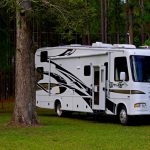


The best Class A motorhome brands for you depend on the coach’s floorplan, chassis, support network, and condition—not just its nameplate. Start by comparing gas coaches with diesel pushers, then narrow your choices to layouts that fit how you actually travel.
We’ve watched buyers fall in love with gleaming countertops, only to discover that the fridge is awkward to reach with a slide in or there’s nowhere sensible to store their gear. A quick walk-through with the slides retracted—and a look at the coach’s weight ratings—can reveal more than a shiny brochure ever will.
This guide covers 25 Class A motorhome brands and builders, from familiar manufacturers such as Newmar, Tiffin, Winebago, and Thor Motor Coach to luxury specialists and legacy names found on the used market. We’ll help you compare them without pretending one badge makes every coach a winner.
Key Takeaways
- Choose by fit, not fame: Compare floorplans, payload, chassis, towing capacity, and service access before settling on a brand.
- Gas and diesel coaches serve different needs: Gas may suit simpler or shorter-distance travel; diesel pushers often offer different chassis and amenity packages, with more complex ownership considerations.
- Inspect the specific motorhome: Model year, maintenance, water damage, and prior repairs can matter more than brand reputation—especially on the used market.
- Test the everyday details: Walk through with slides retracted, try the kitchen and bathroom, open storage bays, and take a proper test drive.
- Plan for support and maintenance: Verify warranty terms, recalls, parts availability, and service options for the exact coach you’re considering.
Table of Contents
- ⚡️ Quick Tips and Facts: Class A Motorhome Brands
- 🛣️ Class A Motorhome History: From Highway Coaches to Luxury RVs
- 🏆 25 Best Class A Motorhome Brands to Know
- 1. Newmar
- 2. Tiffin Motorhomes
- 3. Entegra Coach
- 4. Winebago
- 5. Fleetwood RV
- 6. Holiday Rambler
- 7. Thor Motor Coach
- 8. Forest River
- 9. Coachmen
- 10. American Coach
- 11. REV Recreation Group
- 12. Renegade RV
- 13. Foretravel Motorcoach
- 14. Newell Coach
- 15. Marathon Coach
- 16. Liberty Coach
- 17. Entegra Coach Cornerstone and Anthem
- 18. Winebago Industries’ luxury brands
- 19. Gulf Stream Coach
- 20. Numar
- 21. Beaver Motorcoach
- 22. Monaco Coach
- 23. Country Coach
- 24. Barth Motor Coach
- 25. Newer and specialty Class A manufacturers
- 🔍 Class A Motorhome Types: Gas, Diesel Pusher, and Luxury Coach
- 📊 Class A RV Brand Comparison: Chassis, Floorplans, and Features
- 💰 New vs. Used Class A Motorhomes: What to Consider
- 🧭 How to Choose the Right Class A Motorhome Brand
- Match the motorhome to your travel style
- Compare floorplans, sleeping capacity, and storage
- Check chassis, towing capacity, and drivability
- Evaluate build quality, warranty, and dealer support
- 🧰 Ownership Costs, Maintenance, and Reliability
- 🚐 Class A Motorhome Test-Drive and Inspection Checklist
- ⚖️ Class A vs. Class B and Class C Motorhomes
- 🌲 Class A Motorhomes for Full-Time Living, Families, and Bondocking
- 🎯 Conclusion
- 🔗 Recommended Links
- ❓ FAQ
- What are the best Class A motorhome brands?
- Which Class A motorhome brands make diesel pushers?
- Are gas or diesel Class A motorhomes better?
- Which Class A RV brands are best for full-time living?
- Are used Class A motorhomes worth buying?
- What should you inspect before buying a Class A motorhome?
- 📚 Reference Links
⚡️ Quick Tips and Facts: Class A Motorhome Brands
If you’re comparing RV brands, here’s the short version: the best Class A motorhome brand is the one whose floorplan, chassis, support network, and real-world condition fit your travel plans—not simply the one with the shiniest paint. We’ve seen buyers fall for a gorgeous lounge and only later discover that the kitchen storage or cargo capacity doesn’t suit how they actually travel.
| Quick fact | What to know |
|---|---|
| What counts as Class A? | A motorhome built on a heavy-duty motorized chassis, with a broad, bus-like front profile. The RV Industry Association explains RV types and classifications. |
| Main powertrains | Gas Class A coaches commonly use a Ford F-53 chassis; diesel pushers often use chassis from Freightliner Custom Chassis or Spartan. Confirm the exact model-year specification. |
| Typical trade-off | Gas coaches can be simpler to shop and maintain; diesel pushers commonly offer different ride, towing, storage, and amenity packages, but ownership involves more complex systems. |
| Brands to compare | Newmar, Tiffin, Entegra Coach, Winebago, Fleetwood, Holiday Rambler, Thor Motor Coach, Forest River, Coachmen, and specialty builders such as Foretravel and Newell. |
| Best first shopping move | Compare floorplans and payload before finishes. Check the coach’s actual weight labels and its manuals, not just a brochure. |
| Best used-RV move | Get a professional inspection that includes the roof, slides, appliances, generator, chassis, and water systems. The National RV Dealers Association buyer resources can help you identify questions to ask a dealer. |
A quick reality check: brand reputation is useful, but it cannot tell you whether a particular used coach has water damage, whether its carrying capacity works for your gear, or whether service is convenient where you travel. Those details decide whether your first long trip feels like vacation—or a rolling troubleshooting seminar.
🛣️ Class A Motorhome History: From Highway Coaches to Luxury RVs

Class A motorhomes evolved from bus-like recreational coaches into a diverse category that now ranges from relatively straightforward gas-powered family rigs to hand-finished, high-end diesel motorcoaches. The broad shape is only the beginning: brands differ in construction methods, chassis, residential features, and the kinds of travel they’re designed to support.
The RV business has also changed through acquisitions, reorganizations, and brand families. That means a badge on the side doesn’t always tell the full ownership or support story. For older and discontinued coaches, the manufacturer’s history, parts availability, and the present-day service network can matter as much as the original build.
How the Class A market is organized
- Gas Class A motorhomes typically use a front-engine chassis and are often positioned for buyers who want a broad selection of layouts and familiar automotive-style service options.
- Diesel pushers place the diesel engine at the rear. They often offer different chassis and equipment combinations, along with large basement storage and higher-end amenities on many models.
- Luxury and specialty motorcoaches may be built in smaller volumes, customized extensively, or designed around premium residential finishes.
- Pre-owned and discontinued brands can offer appealing value, but buyers should verify who supports the coach today and whether model-specific components remain available.
For authoritative context on how manufacturers and dealers fit into the industry, see the RV Industry Association’s industry information. For a broader look at motorized RV types, browse our guide to Class A Motorhomes and compare with Class C Motorhomes.
🏆 25 Best Class A Motorhome Brands to Know
There isn’t one universally “best” Class A maker. A shopper prioritizing a family bunk layout may make a very different choice from a couple looking for a quiet diesel coach for extended travel. Our practical approach: compare brands by the type of coach they build, then evaluate the specific model year and individual unit.
The names below include current manufacturers, luxury specialists, and legacy brands that shoppers may encounter on the used market. Product lines and availability can change; confirm current offerings with the manufacturer or an authorized dealer.
| Brand or builder | Common shopping context | What to investigate |
|---|---|---|
| Newmar | Gas and diesel motorhomes, including higher-end models | Floorplan, chassis, customization, service access |
| Tiffin Motorhomes | Gas and diesel Class A coaches | Model-year build details, support, component availability |
| Entegra Coach | Gas and diesel motorhomes | Chassis and equipment package, warranty terms |
| Winebago | Gas and diesel Class A range | Floorplan, payload, current model specifications |
| Fleetwood RV | Gas and diesel coaches | Model-year support, slides, house systems |
| Holiday Rambler | Gas and diesel motorhomes | Model-specific layout and equipment |
| Thor Motor Coach | Broad motorhome lineup | Configuration, payload, service logistics |
| Forest River | Multiple motorhome product lines | Brand and model division, exact specification |
| Coachmen | Gas and diesel Class A options | Floorplan, chassis, dealer support |
| American Coach | Luxury motorhomes | Equipment, chassis, customization, support |
| Renegade RV | Specialty and premium motorhomes | Exact motorhome classification and use case |
| Foretravel Motorcoach | Luxury and custom-oriented coaches | Build and service history |
| Newell Coach | Bespoke luxury motorcoaches | Custom specification and factory support |
| Marathon Coach | Custom luxury coaches | Conversion details, maintenance and support |
| Liberty Coach | Custom luxury coaches | Coach history, service and parts |
| Gulf Stream Coach | Motorhome manufacturer with legacy products | Current availability and support |
| Jayco | Gas Class A offerings and broader RV lineup | Current floorplans and chassis details |
| REV Recreation Group | Manufacturer group connected with motorhome brands | Identify the specific brand and model |
| Monaco Coach | Legacy and used-market name | Parts and service support for the specific year |
| Beaver Motorcoach | Legacy luxury name found in used listings | Maintenance records and component support |
| Country Coach | Legacy luxury coach builder | Factory records, specialty service, parts |
| Barth Motor Coach | Older specialty and legacy coaches | Condition, refurbishment, parts sourcing |
| National RV | Legacy brand found in used listings | Water intrusion, repair records, parts availability |
| Safari | Legacy brand found in used listings | Chassis and house-system service history |
| Other specialty and legacy builders | Custom, regional, or discontinued coaches | Support plan before purchase |
One important distinction: a manufacturer group, a brand, and a model line aren’t interchangeable. For instance, knowing a coach is from REV Recreation Group doesn’t tell you which Fleetwood or American Coach model you’re inspecting. Ask for the exact year, make, model, chassis, engine, and VIN.
1. Newmar
Newmar builds gas and diesel motorhomes, with model lines that can differ significantly in chassis, size, equipment, and intended buyer. Its New Aire, for example, is positioned as a more compact luxury diesel coach rather than a conventional entry-level gas rig.
A RV Life Magazine Class A buyer’s guide describes the New Aire as “big luxury in a smaller package.” Its example, the New Aire 3543, is listed at 35 feet 10 inches, with a Cumins L9 diesel rated at 450 horsepower and a stated towing capacity of 10,000 pounds. Those figures describe the guide’s cited configuration; model-year specs can change.
Why shoppers consider Newmar:
- Broad range of layouts and equipment across product lines.
- Some models offer premium finishes and residential-style amenities.
- Compact luxury-diesel models may suit buyers who want upscale features without a nearly 45-foot coach.
Potential drawbacks:
- A premium trim level doesn’t erase the need for a thorough inspection.
- A shorter diesel coach may still be a large, heavy vehicle that takes practice to drive.
- Verify payload and towing figures on the exact unit; brochure ratings aren’t a substitute for loaded weights.
Best fit: buyers comparing gas and diesel options, including shoppers who want a luxury coach but don’t necessarily want the largest floorplan.
2. Tiffin Motorhomes
Tiffin Motorhomes is a familiar name in the Class A market, with models and specifications that vary by year and product line. It’s worth comparing the specific coach, not just the badge: floorplan, chassis, equipment, and support arrangements differ from one model to another.
What to compare before choosing:
- Are the kitchen and bathroom practical for everyday use?
- Can the storage areas accommodate your actual travel gear?
- What are the coach’s payload and towing limits?
- Which dealer or service center can handle both chassis and house-system issues?
Best fit: shoppers who want to compare a long-established motorhome brand across more than one layout and equipment level. Check the official Tiffin site for current models and brand support information.
3. Entegra Coach
Entegra Coach offers Class A models in different categories, from gas motorhomes to luxury diesel coaches. The RV Life guide’s example of the Cornerstone 45B lists a Spartan K3 chassis, a 605-horsepower Cumins X15, four slideouts, and a 44-foot-11-inch overall length. Treat that as a reference configuration, not a promise that every model year is identical.
Potential advantages:
- Range of configurations, including high-end diesel coaches.
- Some models focus on premium cabin amenities and large residential-style layouts.
- A larger coach may provide more room for extended travel.
Trade-offs to consider:
- Large coaches require attention to route restrictions, campsite dimensions, and turning space.
- More systems and features mean more items to inspect and maintain.
- Confirm chassis, power, and equipment details from the specific coach’s data plate and documentation.
Best fit: buyers who want to compare gas and high-end diesel options under one manufacturer name. Start with Entegra’s current lineup.
4. Winebago
Winebago offers a range of motorhome products, including Class A models. In the RV Life guide, the Adventurer 35R is described as a gas coach with a Ford F-53 chassis, 7.3-liter V8, touchscreen multimedia system, and residential-style refrigerator. The cited guide also notes Apple CarPlay and Android Auto, but equipment can vary by year and trim.
Winebago’s breadth can help shoppers compare different layouts and use cases. Still, don’t choose solely by the floorplan rendering: visit the coach and test the reach, walking paths, bed access, bathroom clearance, and storage doors.
Best fit: buyers who want a widely recognized manufacturer and a broad RV lineup to compare. See the Winebago motorhome lineup.
5. Fleetwood RV
Fleetwood RV is associated with both gas and diesel motorhome offerings. Model examples in the RV Life buyer’s guide include the Frontier diesel series, with features such as large storage areas, a convertible dining/workstation arrangement, and heating-system options on some configurations.
What may appeal:
- Different floorplans and equipment packages, including diesel models.
- Features aimed at extended stays, such as storage and office-style seating.
- Some models provide residential amenities and multiple air conditioners.
What to verify:
- Exact model year and equipment list.
- Weight ratings, slide operation, and signs of roof or wall leaks.
- Whether specialized systems can be serviced conveniently along your routes.
Best fit: shoppers who want to compare gas and diesel coaches with a focus on layouts and amenities. Browse the Fleetwood RV model lineup.
6. Holiday Rambler
Holiday Rambler sells motorhomes across different categories, and its used-market coaches span many model years. The RV Life guide’s examples include gas models such as the Vacationer and Eclipse, with family-friendly or suite-style layouts depending on configuration.
For families, check how a coach handles sleeping arrangements when everyone is inside on a rainy day. For couples, test whether the bathroom, kitchen, and bed are comfortable enough for ordinary routines—not just a quick walkthrough.
Best fit: shoppers comparing gas coach floorplans, including configurations aimed at families or longer stays. Confirm present availability and support through the official Holiday Rambler site.
7. Thor Motor Coach
Thor Motor Coach offers a large assortment of motorhomes, including Class A models. A cited Miramar 35.4 example in the RV Life buyer’s guide highlights a three-slide layout, residential-style refrigerator, solid-surface counters, generator, and solar preparation.
Why compare it: a broad lineup means you may find several floorplans with different sleeping, kitchen, and storage arrangements.
What to look closely at:
- Fit and finish in the actual unit, especially around cabinets and slide seals.
- Payload remaining after dealer-installed options and travel equipment.
- Generator, electrical system, and air-conditioning operation under load.
- Service access for the engine, transmission, and house components.
Best fit: buyers who want a broad selection of floorplans and features. Browse current models on the Thor Motor Coach site.
8. Forest River
Forest River is a large RV manufacturer with multiple product divisions. That size means shoppers should identify the specific motorhome brand and model, rather than treating Forest River as one uniform Class A product.
Shopping checklist:
- Which division made the coach?
- What chassis and engine does the exact year use?
- Is the floorplan practical with slides retracted?
- Which dealer or repair facility will support the unit?
Best fit: buyers comparing models across a broad manufacturer portfolio. Use the Forest River official site to find current products and company information.
9. Coachmen
Coachmen offers Class A motorhomes in multiple configurations. The RV Life guide discusses gas Mirada and Pursuit examples, along with the diesel Sportscoach. That contrast illustrates a useful point: a brand may offer models with very different driving, service, and ownership profiles.
Potential strengths:
- More than one powertrain category to compare.
- Floorplans that may suit couples, families, or longer trips.
- Gas and diesel options can help buyers compare trade-offs within a brand.
Potential drawbacks:
- Features and chassis differ by model; don’t assume one Coachmen spec applies to another.
- A long list of standard equipment still needs hands-on testing.
- Check the service and warranty details for the particular model year.
Best fit: shoppers looking at varied Class A configurations. See Coachmen’s official motorhome information.
10. American Coach
American Coach focuses on luxury motorhomes. The RV Life guide’s American Eagle 45E example describes a 44-foot-11-inch coach with a Cumins X15 diesel rated at 605 horsepower and premium interior elements, including quartz countertops and a kitchen island.
That kind of luxury brings a second shopping question: how much of the added equipment will you actually use? A residential refrigerator, extensive entertainment system, and premium finishes can be wonderful for long stays, but they also add complexity and create more systems to maintain.
Best fit: buyers prioritizing high-end appointments and a spacious diesel-coach experience. Confirm current model specifications and support through the American Coach site.
11. REV Recreation Group
REV Recreation Group is a company group associated with multiple RV brands. Shoppers often encounter the name while researching a particular coach, but the RV’s model-specific details matter more than the parent-group label.
Before buying, identify:
- The brand printed on the coach.
- The exact model and model year.
- The chassis and engine manufacturer.
- The present source of warranty, parts, and service information.
The RV Life guide describes a Fleetwood Frontier GTX example with diesel power, multiple slides, solar equipment, and office-oriented seating options. Always confirm such details against the exact vehicle and current manufacturer materials.
12. Renegade RV
Renegade RV is best approached as a specialty motorhome maker rather than a direct stand-in for every conventional Class A line. Model classifications, chassis, and intended uses can differ, so check the company’s current lineup and the exact vehicle documentation.
Best fit: buyers whose priorities include specialized construction or a particular motorhome format. Be precise about whether you’re comparing a conventional Class A, a Super C, or another motorized RV type.
13. Foretravel Motorcoach
Foretravel is associated with luxury motorcoaches and custom-oriented builds. Buyers should approach each coach as an individual machine: service records, equipment, prior ownership, and refurbishment history are essential.
Inspect carefully:
- Chassis and engine service records.
- Roof, slide seals, and evidence of past water intrusion.
- Custom electrical, plumbing, and entertainment modifications.
- Availability of technicians familiar with the coach’s systems.
Best fit: shoppers seeking a high-end coach and prepared to research the particular vehicle deeply.
14. Newell Coach
Newell Coach builds high-end, custom-oriented motorcoaches. A Newell should be evaluated as a complete custom vehicle, not simply by comparing its badge or length with a mass-market model.
Ask the seller for:
- Build sheets and service documentation.
- Records for major chassis, engine, transmission, and generator work.
- Details on custom electronics and replacement components.
- A recent inspection by a technician familiar with luxury coaches.
15. Marathon Coach
Marathon Coach is a specialist in luxury motorcoach conversions and custom work. A customized coach can offer an exceptional interior, but customization makes the paper trail especially important.
Potential benefits: tailored layouts, premium materials, and bespoke equipment.
Potential drawbacks: complex systems, specialized service requirements, and the need to verify that custom features remain functional and supportable.
16. Liberty Coach
Liberty Coach builds and supports luxury coach conversions. When comparing a Liberty coach, look beyond the interior finish: ask about the donor coach, conversion specifications, service history, and the present-day support path for every major system.
17. Entegra Coach Cornerstone and Anthem
Entegra’s luxury lines, including the Cornerstone and Anthem, appeal to buyers looking for large diesel coaches and high-end features. Exact offerings change over time, so compare current model-year specifications rather than relying on an older review.
The RV Life guide’s Cornerstone example is nearly 45 feet long, with four slides and a high-output diesel engine. That is a substantial home on wheels—fantastic for spacious living, but demanding when choosing campsites, navigating tight fuel stations, and planning routes.
18. Winebago Industries’ luxury brands
Winebago Industries encompasses RV and motorhome products across different names and categories. Brand-family ownership can change, so verify current corporate information directly rather than relying on an old dealer listing or forum post.
When you find a luxury or specialty model connected with a larger group, check who currently provides warranty support, parts, and service. That practical answer matters more on a rainy Tuesday in a repair shop than the corporate org chart.
19. Gulf Stream Coach
Gulf Stream Coach is a real manufacturer to research, especially when you encounter its coaches in listings or older inventories. Confirm the current product range and the support situation for the specific model year you’re considering.
Used-coach tip: ask for repair invoices and inspect for water damage. A bargain-looking older motorhome can become an expensive hobby if the roof, walls, or floor have absorbed moisture.
20. Jayco
Jayco is widely known across several RV categories and has offered Class A models. The RV Life guide’s Precept Prestige 36H example describes a gas-powered coach with a Ford F-53 chassis and a three-slide layout.
Best fit: shoppers who want to compare motorhome layouts from a manufacturer with a wide RV portfolio. Check the current Jayco motorhome range and verify that any model under consideration remains available in the relevant year.
21. Monaco Coach
Monaco Coach is a name many buyers encounter while shopping for used motorhomes. For older or discontinued coaches, the important questions are often who can service it, which parts are still available, and whether the records show regular maintenance.
A legacy name can represent a well-equipped coach, but age and condition vary dramatically. Inspect the roof and sidewalls, run every appliance, and have the chassis evaluated by a qualified technician.
22. Beaver Motorcoach
Beaver is another legacy name in the luxury motorcoach market. Treat each used Beaver as its own case: the year, original configuration, later modifications, and maintenance history may matter more than what the badge suggests.
Before purchase: get a specialist inspection, confirm replacement-part options, and budget for correcting deferred maintenance. An older premium coach can still be an excellent travel companion, but “premium when new” is not a repair plan.
23. Country Coach
Country Coach is a legacy builder that appears in used-market searches. The appeal may be a well-appointed interior or a coach built for extended travel, but support and condition need careful investigation.
- Ask for engine, transmission, generator, and chassis records.
- Test the electrical system and all major appliances.
- Check for roof leaks, delamination, and slide problems.
- Consult a technician familiar with the relevant coach systems.
24. Barth Motor Coach
Barth is a historic specialty name that buyers may find while exploring older motorhomes. A classic coach can have character in abundance—but don’t let polished nostalgia distract from structural condition, obsolete equipment, or hard-to-find parts.
Best fit: knowledgeable buyers who value a restoration or specialty project and have access to the right maintenance expertise.
25. Other specialty and legacy builders
The used market includes additional discontinued or specialty names. If you’re evaluating one, use this order:
- Confirm identity: make, model, year, VIN, and chassis.
- Find documentation: owner’s manuals, wiring diagrams, and service records.
- Check support: determine who services the engine and house systems.
- Inspect for water damage: roof, seams, windows, slides, flooring, and storage bays.
- Assess parts availability: especially for proprietary electronics, windows, and body components.
- Get an independent inspection: ideally from an RV inspector and a chassis mechanic.
If you’re exploring other RV formats, our guides to Fifth Wheel RVs and Fifth Wheel RV Manufacturers can help compare motorized and towable travel styles.
🔍 Class A Motorhome Types: Gas, Diesel Pusher, and Luxury Coach
The big first fork in the road is usually gas versus diesel. Neither automatically wins. Your route, annual mileage, comfort priorities, towing needs, service access, and ownership budget all affect the better choice.
| Type | Typical layout | Potential advantages | Potential trade-offs |
|---|---|---|---|
| Gas Class A | Often front-engine chassis | Broad model selection; familiar gasoline service; may suit occasional or regional travel | Engine noise and driving feel vary; payload and towing limits must be checked carefully |
| Diesel pusher | Rear-mounted diesel engine | Often paired with higher-end chassis, large storage, and premium amenities | More complex systems; maintenance and service planning can be more involved |
| Luxury/custom motorcoach | Varies by builder and conversion | Custom interiors, premium finishes, tailored features | High system complexity; specialized service and parts research matter |
| Legacy or used coach | Varies widely | More choice across prior model years and layouts | Condition, support, obsolete parts, and modifications can be unpredictable |
Gas Class A motorhomes
Gas coaches commonly use a Ford F-53 chassis, though buyers should verify the exact year and specification. The RV Life buyer’s guide describes gas models from Coachmen, Holiday Rambler, Jayco, and Winebago using Ford’s 7.3-liter V8 in the listed examples.
Gas may suit you if:
- You travel seasonally or take shorter trips.
- A gas service network is convenient for your routes.
- Your preferred floorplan is available in a gas model.
- The coach’s actual payload and towing capacity meet your needs.
Potential drawbacks: driving feel, cabin noise, and ride comfort are highly coach-specific. A test drive on more than smooth dealership pavement is worth its weight in coffee.
Diesel pushers
A diesel pusher has its engine at the rear. Many are designed around longer travel and higher equipment levels, but “diesel” doesn’t automatically mean better for every owner. The purchase choice should account for chassis, maintenance, use, and service access together.
Diesel may suit you if:
- You travel frequently over longer distances.
- You value the specific chassis and amenities offered in the model.
- Your towing and storage requirements match the coach’s ratings.
- You have access to technicians who can service its systems.
Luxury and custom coaches
Luxury coaches can add residential appliances, premium counters, heated flooring or water systems, advanced electronics, and elaborate entertainment packages. Those features make life on board pleasant, but they’re only valuable if they suit how you travel and can be maintained.
Ask yourself: Would you rather have the deluxe kitchen, or more payload for bikes, tools, water, and outdoor gear? We’ve watched buyers choose a coach based on its showroom sparkle, then realize that a simple, well-organized storage bay would have made more difference on trip number one.
📊 Class A RV Brand Comparison: Chassis, Floorplans, and Features
This comparison uses brand and model examples discussed in the RV Life buyer’s guide. It is not a current model-year spec sheet: specifications, equipment, and availability may change. Before buying, confirm the data with the manufacturer and the coach’s actual labels.
| Brand and example | Type or chassis in cited example | Approx. length in source | Features highlighted in source | Buyer takeaway |
|---|---|---|---|---|
| American Coach American Eagle 45E | Cumins X15 diesel; Freightliner/Liberty Bridge chassis | 44 ft 11 in | Kitchen island, quartz counters, premium appliances | Luxury-focused; inspect complexity and support |
| Coachmen Mirada 35 ES | Ford F-53 gas V8 | 36 ft 10 in | Two slides; optional washer/dryer | Compare payload and actual option package |
| Coachmen Pursuit 31TS | Ford F-53 gas V8 | 33 ft | Dual A/C, fireplace, king bed in cited configuration | Check sleeping and storage needs in person |
| Coachmen Sportscoach 354 QS | Freightliner diesel | 36 ft 3 in | Four slides; diesel-pusher layout | Spacious diesel option; verify year-specific specs |
| Entegra Cornerstone 45B | Spartan K3; Cumins X15 diesel | 44 ft 11 in | Four slides, premium seating and appliances | Large luxury coach; campsite planning matters |
| Jayco Precept Prestige 36H | Ford F-53 gas | 38 ft 8 in | Three slides; solid-surface counters | A gas layout with upscale features |
| Newmar New Aire 3543 | FCC or Spartan chassis, per cited source | 35 ft 10 in | Diesel power; full-wall slide; king bed | Compact relative to many luxury diesel coaches |
| Thor Motor Coach Miramar 35.4 | Gas motorhome in cited example | Not stated here | Three slides, residential refrigerator, generator | Assess option list and payload |
| Winebago Adventurer 35R | Ford F-53 gas | 35 ft 5 in | Corian counters, residential refrigerator | Confirm current availability and specifications |
| Fleetwood Frontier GTX 37RT | Freightliner XCR diesel | 37 ft 11 in | Office option, solar, cellular equipment | Potential fit for work-from-coach needs |
Don’t compare length alone
A 36-foot coach and a 38-foot coach can feel very different inside, depending on slide position, kitchen placement, bathroom layout, and how usable the space is with slides retracted.
During a walkthrough, test these ordinary moments:
- Can someone reach the refrigerator when a slide is in?
- Can you get to the bathroom at a fuel stop?
- Is there a clear path from the bed to the door?
- Can the family sit down without blocking the kitchen?
- Do storage bays open fully when parked?
- Is the shower comfortable for your height and build?
Confirm the weight numbers
The terms GVWR, GCWR, GAWR, hitch rating, and cargo carrying capacity are not interchangeable. Learn what each means from the vehicle labels and owner’s documentation. The NHTSA RV safety resources are a useful starting point for safety information; for the coach’s exact operating limits, consult its manufacturer and chassis manuals.
A useful habit: weigh the coach loaded for travel. That means passengers, pets, full water or typical water load, food, clothes, tools, and accessories. The brochure weight isn’t the weight of your actual road trip.
💰 New vs. Used Class A Motorhomes: What to Consider
A new motorhome can provide current equipment and a clearer starting point for warranty questions. A used coach may offer a layout or level of equipment that fits your needs better, but age and maintenance history deserve close attention. Neither path is automatically the safer buy.
| Consideration | New coach | Used coach |
|---|---|---|
| Model availability | Current floorplans and equipment | Broader selection across prior model years |
| Warranty | Check exact written coverage and exclusions | Remaining coverage may be limited or unavailable |
| Condition | New does not mean free from defects; inspect delivery condition | Condition depends on use, storage, maintenance, and repairs |
| Parts and systems | Current documentation is generally easier to source | Legacy components may need research or specialist help |
| Price comparison | Compare out-the-door terms and included equipment | Compare condition, records, upgrades, and needed repairs |
| Inspection | Complete a pre-delivery walkthrough | Independent inspection is strongly advisable |
Buying new: inspect before you sign off
Do not treat the dealer walkthrough as a formality. Ask to test the generator, water heater, refrigerator, air conditioners, slides, leveling system, roof vents, awnings, and every control. The Federal Trade Commission’s vehicle buying guidance is written for vehicles broadly, but its emphasis on written terms and careful review is relevant when negotiating any major vehicle purchase. For RV-specific warranty questions, rely on the actual manufacturer warranty document.
Buying used: make the inspection independent
A seller’s word and a clean interior are not substitutes for a professional inspection. The National RV Inspectors Association can help you find qualified inspection resources. Ask for a written report and make sure it covers both the living area and vehicle systems.
We’d be cautious if:
- There are soft spots, bubbling, stains, or unexplained odors.
- The seller cannot provide maintenance records.
- Slides bind, leak, or leave damaged seals.
- The generator has no service history or won’t run under load.
- A custom electrical change has no diagram or documentation.
- The seller resists an independent inspection.
🧭 How to Choose the Right Class A Motorhome Brand
The smartest first question isn’t “Which brand is best?” It’s “What will a normal day in this coach look like for us?” Start with how you travel, then use the brand shortlist to find models that serve that reality.
Match the motorhome to your travel style
Write down your likely use before touring:
- Trip frequency: weekends, seasonal trips, or extended travel?
- Travel party: couples, children, friends, pets?
- Typical distance: local campgrounds, cross-country routes, or repeated long-distance driving?
- Camping style: full-service parks, state parks, off-grid stays?
- Work needs: desk space, video calls, reliable cellular connection?
- Tow needs: car, trailer, bikes, or no towed vehicle?
A coach that excels at extended stays may feel oversized for occasional short trips. On the other hand, a tight layout can wear thin when a family spends three rainy days inside. Match the coach to the most common use, not the once-a-year dream itinerary.
Compare floorplans, sleeping capacity, and storage
Look beyond advertised sleeping capacity. A sofa bed or overhead bunk may technically add beds, but ask whether it’s comfortable for the people who will use it.
Test the floorplan step by step:
- Walk through with all slides retracted.
- Open the refrigerator and bathroom doors.
- Sit at the dinette and try the seating.
- Open every wardrobe, drawer, and exterior bay.
- Lie on the bed and check access from both sides.
- Consider where pets, shoes, coats, and wet gear go.
- Ask whether the number of people in the coach can move around at once.
A family that needs bunks may also want a separate bathroom zone. A couple who works remotely may value a stable workstation more than an extra sleeping spot. That’s why RV Brands™ recommends comparing the actual layout before comparing countertop color.
Check chassis, towing capacity, and drivability
A Class A can feel very different depending on wheelbase, suspension, engine, tires, and coach length. Take a test drive on a real road route, not only around the dealership lot.
On the test drive, assess:
- Steering response and wind sensitivity.
- Visibility through the windshield and side mirrors.
- Seat comfort, noise, and passenger communication.
- Braking feel and lane changes.
- Turning radius and rear overhang.
- Whether the coach feels stable at typical highway speeds.
For towing, confirm the actual rated capacity and loaded coach weight, then account for the towed vehicle or trailer. Never assume the hitch rating alone tells you how much you can safely tow.
Evaluate build quality, warranty, and dealer support
A good brand choice includes a workable support plan. Ask the dealer and manufacturer:
- What does the written warranty cover, and for how long?
- Which components have separate manufacturer warranties?
- Who handles chassis issues versus house-system repairs?
- Is warranty work available at authorized service centers along your routes?
- How are recalls and service bulletins checked?
- What does the coach owner’s manual say about maintenance intervals?
You can check vehicle recall information through the NHTSA recall lookup. For RV-specific concerns, ask the manufacturer and chassis maker for the relevant VIN-based information.
🧰 Ownership Costs, Maintenance, and Reliability
We can’t responsibly rank all Class A brands by “reliability” with a single score. Model years, suppliers, owner maintenance, storage, climate, and how a coach was used all affect the outcome. A well-maintained coach from a less-fashionable brand can be a better buy than a neglected premium one.
Build a maintenance plan before the first trip
Keep a file with:
- Chassis and engine service records.
- Generator maintenance and operating logs.
- Tire age, condition, and pressure specifications.
- Roof and seal inspections.
- Slide, awning, and leveling-system service.
- Appliance manuals and warranty information.
- Recall and repair documentation.
- Water-system winterization and sanitizing history.
The NHTSA recall database is useful for safety-related recalls. For recommended service intervals, follow the specific engine, chassis, generator, and appliance manuals; one generic interval doesn’t apply to every coach.
Reliability questions worth asking
- Are repairs documented, or only described verbally?
- Has the coach been stored under cover?
- Are there signs of water intrusion or previous structural repair?
- Have the slides and leveling system been operated and serviced regularly?
- Can a local technician source the parts?
- Does the dealer have experience with this exact chassis and model?
Owner insight: we’d rather see a thick folder of routine service receipts than hear “it’s always been reliable” with no paperwork. A logbook may not be thrilling reading at the campground, but it can tell you whether the coach was cared for when nobody was looking.
🚐 Class A Motorhome Test-Drive and Inspection Checklist
Use this checklist on a new or used coach. For a used purchase, pair it with an independent inspection rather than trying to become a one-person RV forensic lab.
Before the walkthrough
- Confirm make, model, year, VIN, chassis, and engine.
- Request the owner’s manuals and maintenance records.
- Compare the equipment list with what is actually installed.
- Inspect the coach on a dry day if possible, but don’t skip an inspection after rain.
- Ask the seller to leave systems available for testing.
Interior systems
- Run the air conditioners, furnace, water heater, refrigerator, and generator.
- Test all outlets, lights, monitors, pumps, and control panels.
- Operate each slide fully; inspect seals and flooring around it.
- Check faucets, toilet, shower, drains, and visible plumbing.
- Open cabinets and inspect for stains, swelling, mold, or repairs.
- Test the microwave, cooktop, oven, and any residential appliances.
Exterior and roof
- Look for cracked or loose sealant, soft spots, stains, and bubbling.
- Examine roof edges, vents, skylights, windows, and slide seals.
- Check storage-bay doors, latches, flooring, and signs of water entry.
- Inspect tires for age, wear, and sidewall damage.
- Test awnings, steps, mirrors, cameras, and exterior lights.
Road test and records
- Drive over uneven pavement, on a highway, and through turns when safe.
- Note steering, braking, noise, vibration, and visibility.
- Verify the coach’s weight ratings and towing capacity.
- Check recall status using the NHTSA VIN recall tool.
- Arrange an independent RV inspection through a qualified professional, such as one found via the NRVIA inspector directory.
Walk away—or pause—if a seller refuses reasonable inspection access. A beautiful coach should be able to withstand a flashlight, a test drive, and a few inconvenient questions.
⚖️ Class A vs. Class B and Class C Motorhomes
A Class A is not the right answer for every traveler. Smaller motorhomes can be easier to park and may suit simpler travel patterns, while larger coaches offer more living space and storage. The RV Industry Association’s RV-type overview is a useful reference for understanding categories.
| RV type | General feel | Common advantages | Common trade-offs |
|---|---|---|---|
| Class A | Large, bus-style motorhome | Spacious living area, storage, broad amenity choices | Larger driving footprint, campsite and route planning |
| Class C | Cab-over motorhome | Familiar cab layout and a range of sizes | Less interior volume than many Class A layouts |
| Class B | Van-based motorhome | Compact footprint and everyday maneuverability | Limited living and storage space compared with larger coaches |
If you want a smaller motorized RV, explore our guide to Class C Motorhomes. If you prefer a towable home and already own a capable truck, compare Fifth Wheel RVs and Fifth Wheel RV Manufacturers.
Choose Class A if…
- You want a larger living area and residential-style layout.
- You plan longer stays or extensive travel.
- You’re comfortable practicing with a larger vehicle.
- Your storage, towing, and campsite needs match the coach.
Consider another RV type if…
- You want something easier to use for errands and tighter campsites.
- Your trips are short and you rarely need a large interior.
- You want a towable home that can remain parked while you use a separate vehicle.
- You’d rather prioritize compact travel over residential amenities.
🌲 Class A Motorhomes for Full-Time Living, Families, and Bondocking
The same motorhome can be excellent for one household and frustrating for another. Start with your longest, busiest, or most demanding use case.
Full-time living
For long-term travel, prioritize:
- Comfortable seating and bed access.
- Storage for clothes, tools, and seasonal gear.
- Adequate payload after passengers and belongings.
- Heating and cooling appropriate for your destinations.
- A practical workspace if you work on the road.
- Convenient service and parts support.
A scenic floorplan can still become a cramped office after three video calls, so sit at the desk, check outlet locations, and test the internet setup you expect to use.
Families
Families should pay special attention to:
- Real sleeping arrangements rather than maximum advertised capacity.
- Seat belts and manufacturer-approved seating positions.
- Bathroom access while traveling and at stops.
- Food storage, dining space, and child-safe movement.
- Bunk privacy, noise, and storage for each person.
Never assume every sofa, dinette, or bed is an approved travel seat. Check the vehicle manual and labels for designated seating and restraints.
Off-grid and bondocking
For off-grid camping, the generator and solar label don’t tell the whole story. Check the entire energy system:
- Battery chemistry and usable capacity.
- Solar array size and charge-controller capacity.
- Inverter output and supported appliances.
- Generator fuel and operating requirements.
- Water and waste-tank capacities.
- Heating and refrigeration energy needs.
- Cellular coverage for the places you plan to visit.
Some coaches are solar-prepped rather than fully equipped with the system you need. Ask what is installed, what is merely wired for future installation, and how much power the system can realistically provide under the conditions you expect.
Work-from-coach travel
If the coach doubles as your office, test it like a workplace:
- Sit at the intended desk for at least 20 minutes.
- Check lighting and screen glare.
- Confirm nearby power and charging options.
- Test Wi-Fi or cellular equipment in your actual travel regions.
- Ask how the system works when parked away from hookups.
The Fleetwood and other model examples in the RV Life buyer’s guide mention office-oriented layouts and connectivity features on certain configurations. Those options can be useful, but coverage still depends on network availability and service plans.
A note about video reviews
The featured video, “Best And Worst Class A RV Brands 2024!” by RVing with Andrew Steele offers another perspective on brand shopping. Use it as a conversation starter, not a substitute for a model-year inspection: owners’ experiences can reveal useful patterns, but one video can’t establish the condition or reliability of every coach made under a brand name.